Mehendi, Haldi, Sangeet & Reception
Four occasions, four different jobs for a garment — and almost nobody is dressing only the bride. Made to measure for her, her sister, the bridesmaids, the mothers and the men.
An Indian wedding is not a day, it is a week, and each occasion asks something different of what you are wearing. A mehendi outfit has to work with both hands out of action. A haldi outfit has to survive turmeric, or be chosen knowing it will not. A sangeet outfit has to be danced in for four hours. A reception outfit has to hold its shape through two hundred photographs.
Almost no one who comes to this studio is dressing one person, either. It is the bride and her sister, the bridesmaids, her mother, the men. That is the ordinary shape of the work here, and it is easier for everyone when it is planned as one order rather than five separate panics.
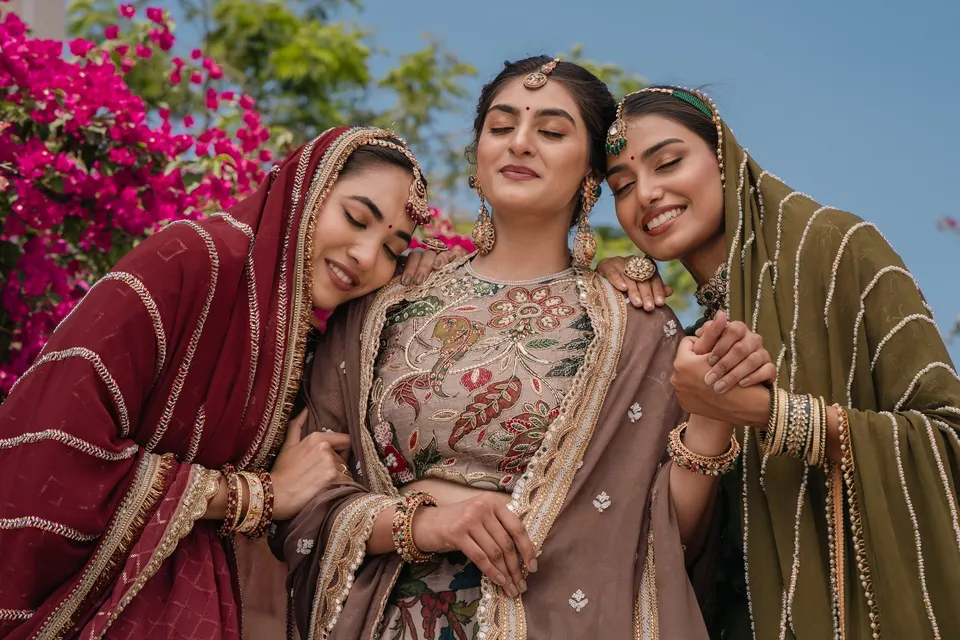
Mehendi
The one nobody plans properly. She will sit for three to five hours with both hands out of action, unable to lift a dupatta, adjust a sleeve or hold anything. So the outfit has to work entirely without her hands: sleeves that stay where they are put, a dupatta that is pinned rather than held, nothing that needs rearranging once the henna is on.
Colour matters more than usual too, because henna is a strong orange-brown and it is going to be in every photograph. Yellows, greens and pinks sit with it. Deep reds fight it.
Haldi
Turmeric stains, and it does not entirely come out. Anyone who tells you otherwise has not tried. So the haldi outfit is the one garment of the week that should be chosen knowing it may not survive — which is exactly why it should not be the expensive one.
Yellow is traditional and practical for the obvious reason. Cotton and lighter silks take the paste better than heavy work, and heavy hand embroidery is wasted here — it is the one occasion where less is genuinely more.
Sangeet
She is going to dance, for hours, having probably rehearsed. Everything about the garment should follow from that: weight she can carry all evening, a skirt with enough flare to move and not so much that it swings against her, a blouse that stays put through raised arms.
This is the occasion where a made-to-measure piece is most obviously different from an altered one. A blouse that fits at rest and rides up when she lifts her arms is a garment fitted standing still.
Reception
The most photographed and the most formal, and usually the one people spend on after the wedding lehenga. It is also the piece most likely to be worn again, which is worth remembering while choosing.
Here weight helps: heavier work holds its shape through a long evening of standing and photographs, where a lighter garment starts to look tired by the end.
Before the week: the engagement
The roka, the sagai or the ring ceremony usually comes months before any of this, and it is the first time both families are photographed together. It has its own page.
Dressing the family, not just the bride
The order we are asked for most often after the bride's own is her sister's — something that reads as family without competing, usually a lighter weight and a colour that sits beside hers rather than against it. After that: bridesmaids who want a shared colour or craft rather than an identical garment, mothers who want something they will wear again, and kurtas for the men.
The groom has a page of his own — what he wears to each of the five days, and why his is worth ordering alongside hers rather than after it.
Made to measure makes this far easier than it sounds, because the same idea can be cut to very different bodies without any of them being the compromise. Five people, one conversation, one delivery date.
From the collections
Every year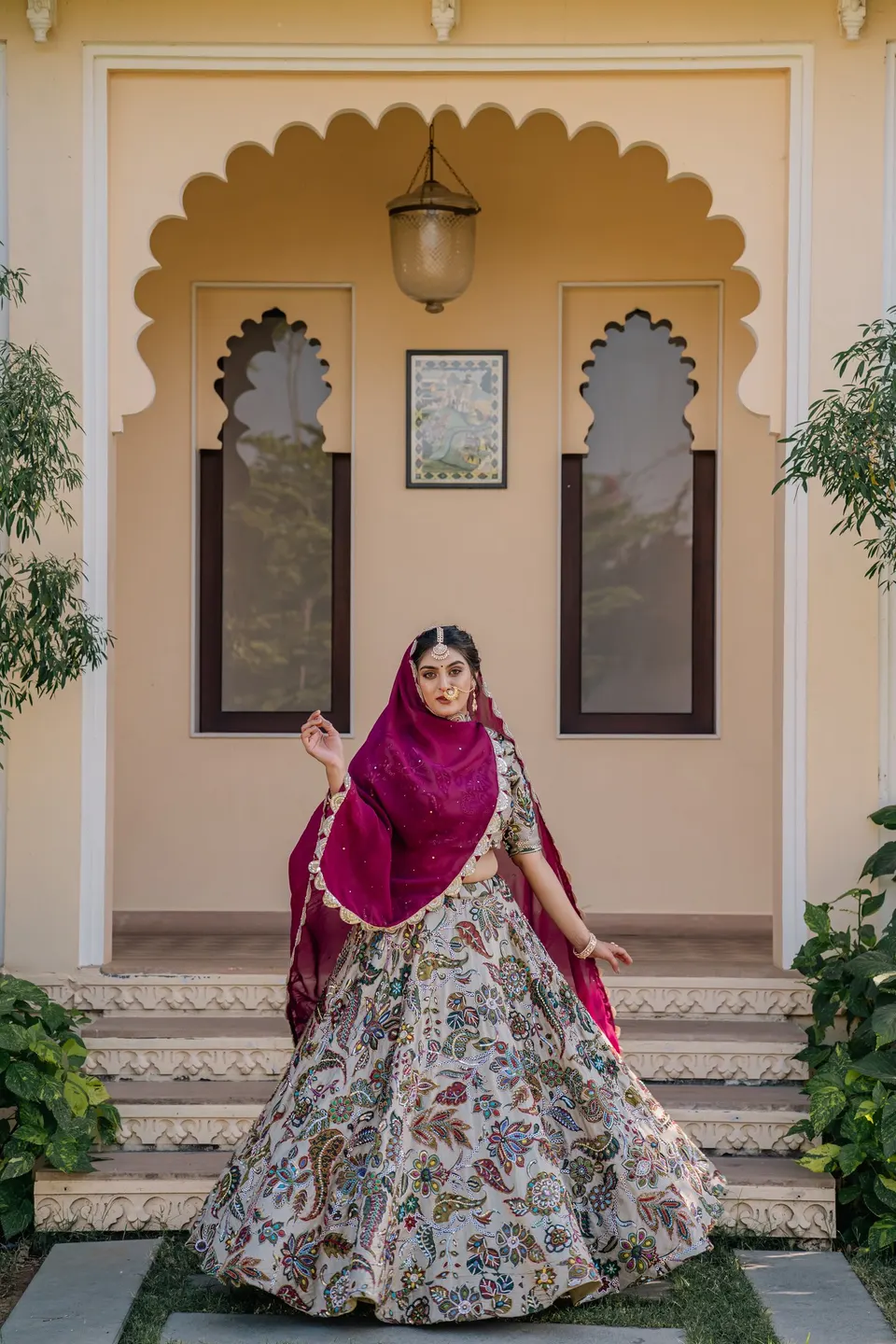
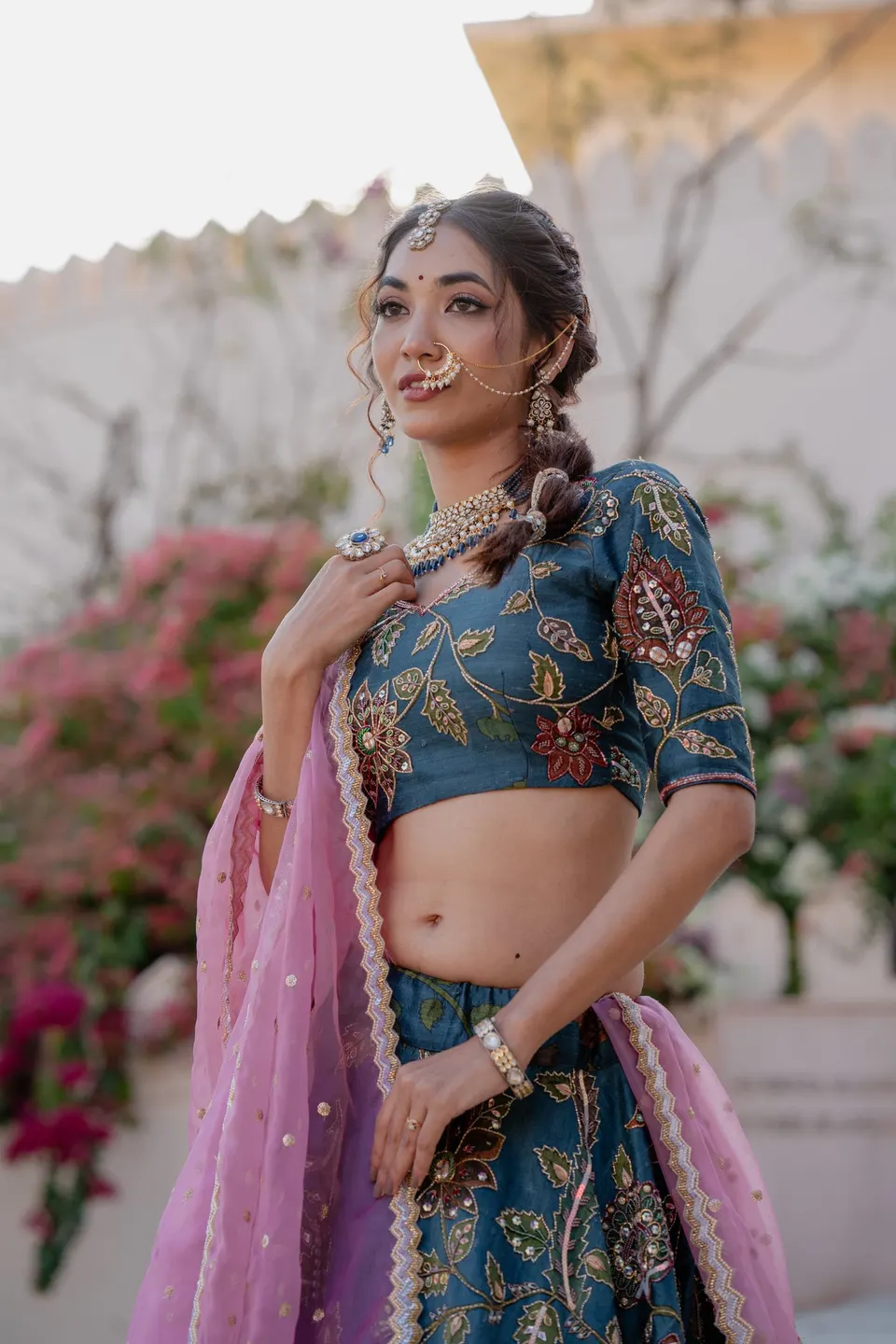
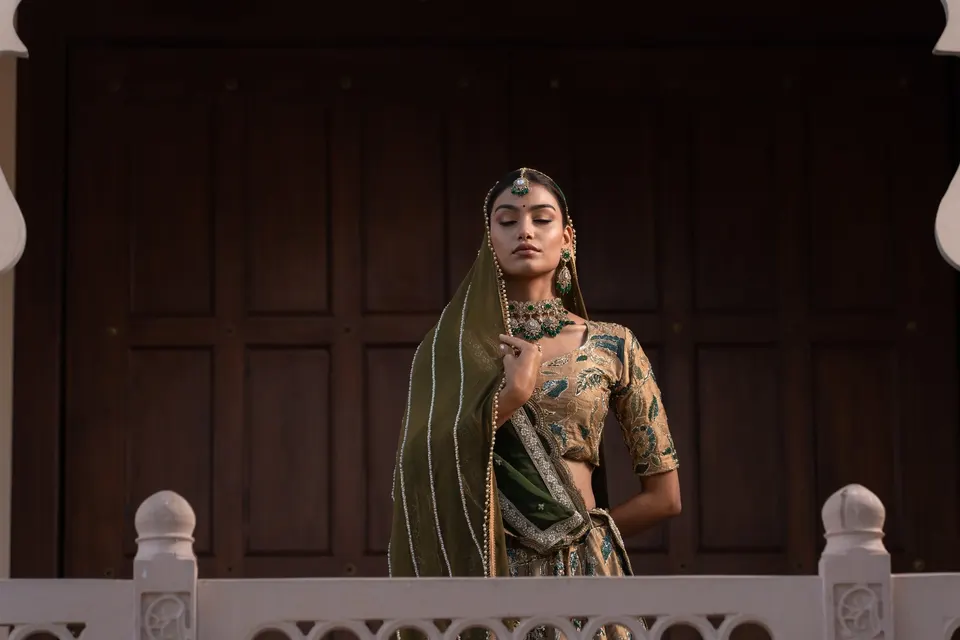
The ceremony itself
This page is about the week around it. The wedding lehenga has its own page, and for a Gujarati ceremony so do the two saris — the panetar worn for the pheras and the gharchola worn after.
Questions we are asked
What should the bride’s sister wear?
Something that reads as part of the family without competing with the bride. In practice that means the same level of finish and a different register — a lighter weight, a colour that sits beside the bride’s rather than against it, and hand work that is present without being the loudest thing in the photograph. It is one of the most common orders this studio takes.
What do bridesmaids wear to an Indian wedding?
There is no fixed rule and Indian weddings do not use the matched-bridesmaid convention the way Western ones do. Most families choose a shared colour or a shared craft across several outfits rather than an identical garment. Made to measure makes that far easier, because the same idea can be cut to very different bodies.
What should men wear for mehendi, haldi and sangeet?
Kurtas for mehendi and haldi — comfortable, and for haldi something you accept may be stained. Sangeet is dressier and usually where a proper kurta set or an Indo-western piece is worn. We make for men and for children in the same studio as everything else.
Will turmeric come out of a haldi outfit?
Not reliably. Turmeric is a dye, and on silk and heavy work it often stays. Choose the haldi outfit knowing that, keep the hand work light, and spend the budget on the pieces that will be kept.
What colour works best for a mehendi outfit?
Yellows, greens and pinks, largely because henna is a strong orange-brown that will appear in every photograph of the day. Deep reds tend to fight it. It is also worth choosing something that works with both hands out of action for several hours.
How far ahead should we order for the whole wedding week?
Further than for one garment. Each piece runs the same four-week calendar, start to finish, but four or five for different people on one date is a different job from one. In the November-to-February season the studio’s places fill months in advance, so the asking wants to be early even though the making itself is weeks.
Can you make for the family if we are not in Vadodara?
Yes. Families travel in from across Gujarat, and for relatives spread between cities or countries we take measurements on a video call of about twenty minutes each and courier the finished pieces.
Tell us the date and who you are dressing
Bring the wedding date, the list of occasions, and how many people. We will tell you plainly what can be made properly in the time.