Bridal Lehengas, Made to Measure
The house line — built on hand embroidery, fitted until it is entirely yours.
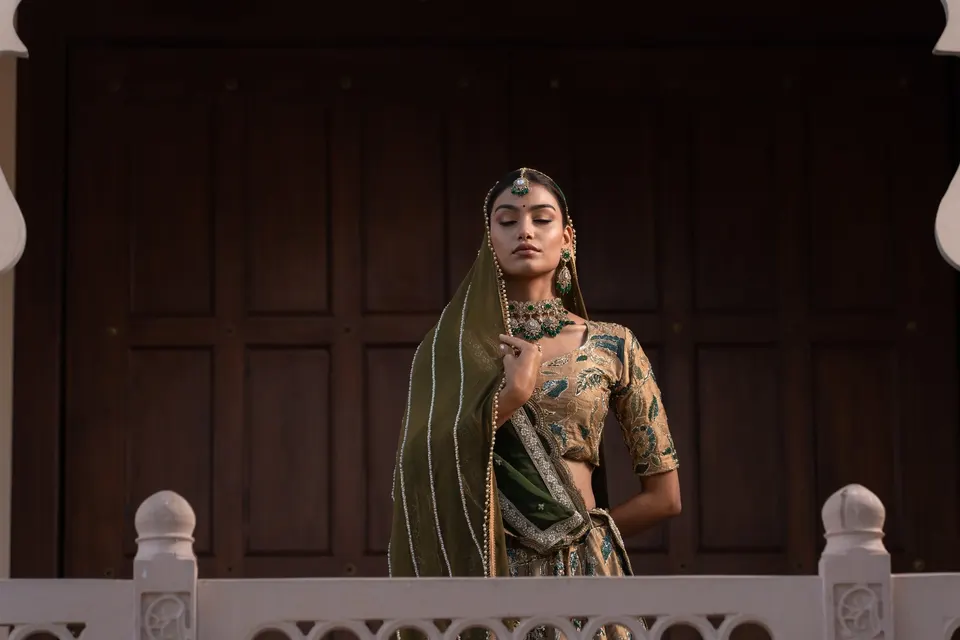
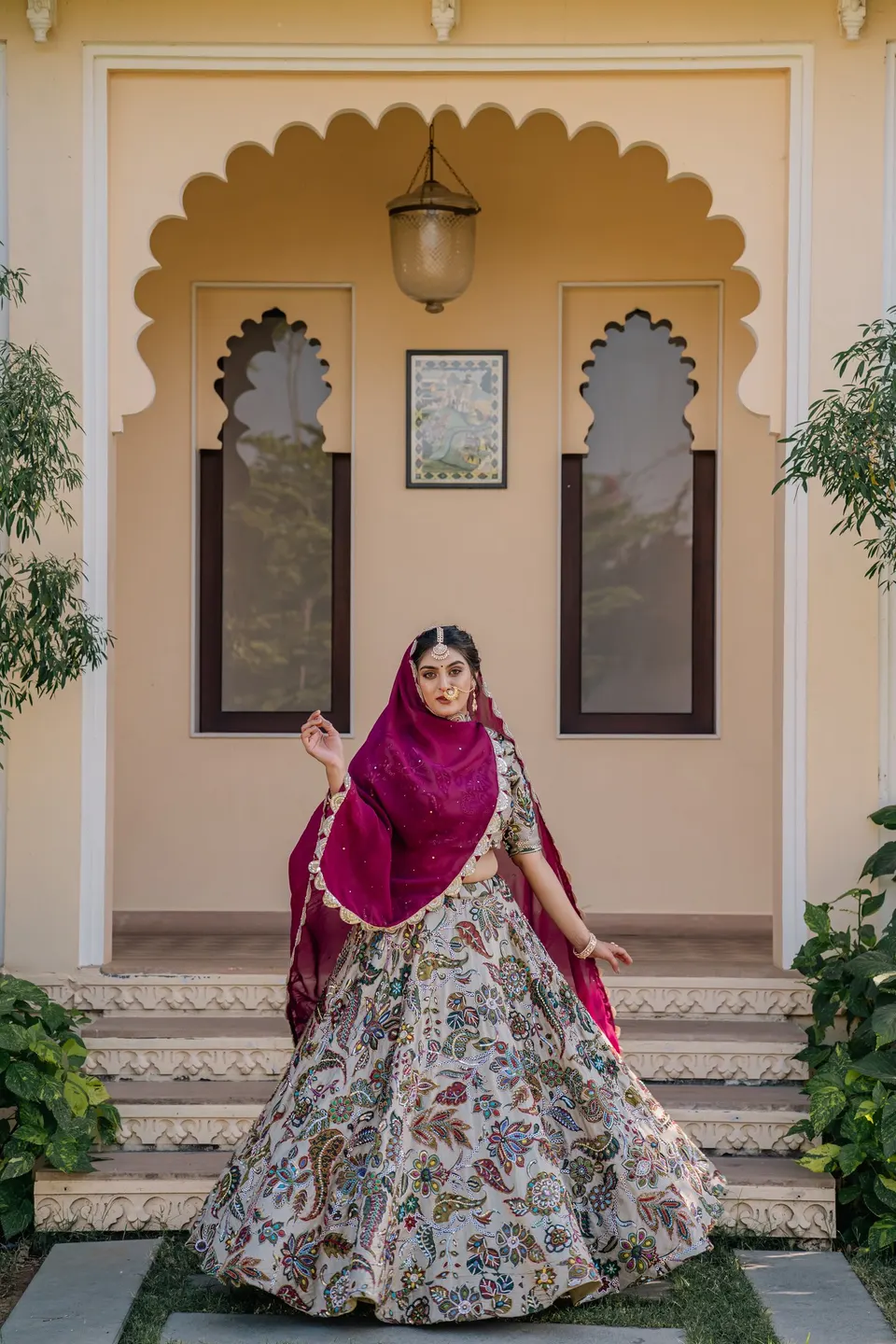
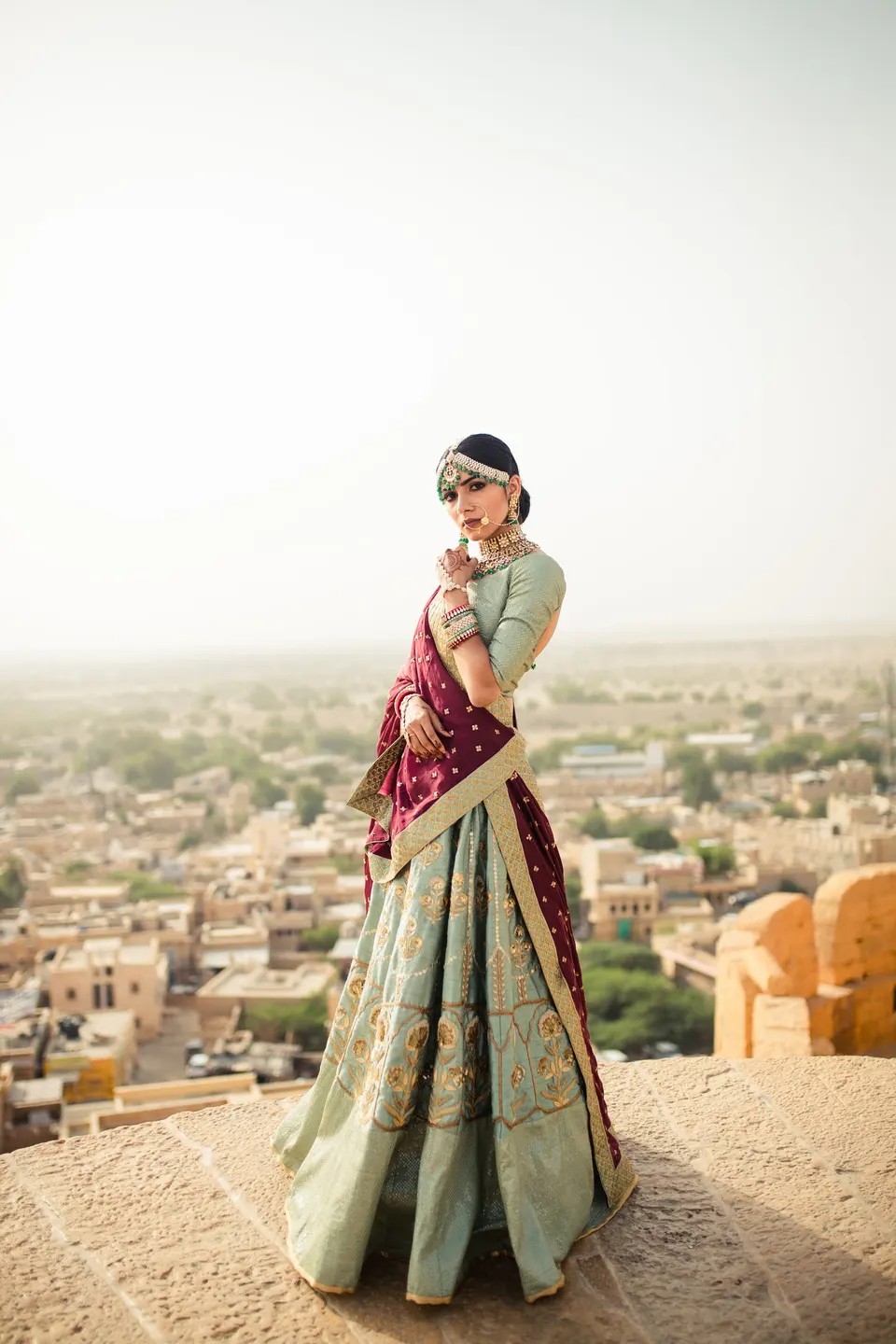
A bridal lehenga from this studio is cut to one body and embroidered by hand, in four weeks at most, in our own studio on Old Padra Road. It is not taken off a rack and altered to fit. That sounds like a small thing. On the wedding morning it is not. A garment altered to fit you is one you spend the day managing. A garment built around you is one you simply wear.
Open since 2014, more than 3,700 customers, and not a single garment made twice. Brides come to the studio from across Gujarat and are fitted from the US, UK, Canada and Australia on a video call.
What made to measure actually means
Most "custom" bridal wear in India is a standard block cut down. Ours starts from your measurements and is fitted three times as it is built — once early, once with the embroidery in place, once near the end when a few millimetres either way is all that is left to decide.
Read more
The three fittings are not ceremony. A lehenga gains weight as the hand work goes on, and weight changes how a garment sits, where it pulls, how the skirt falls when you turn. Fitting it before the embroidery and never again is how a piece ends up beautiful on a hanger and wrong on a body.
The hand work, and what it costs in hours
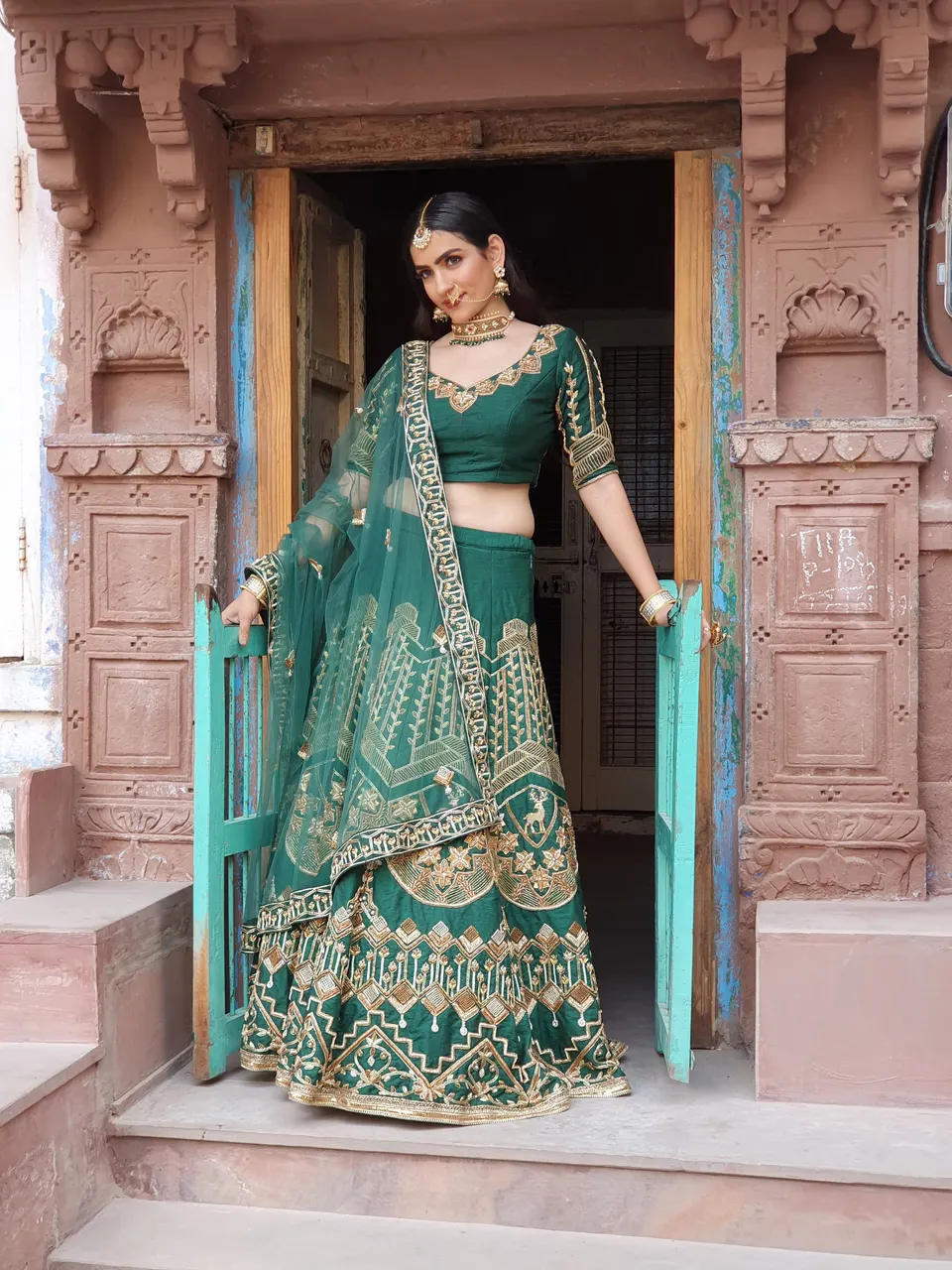
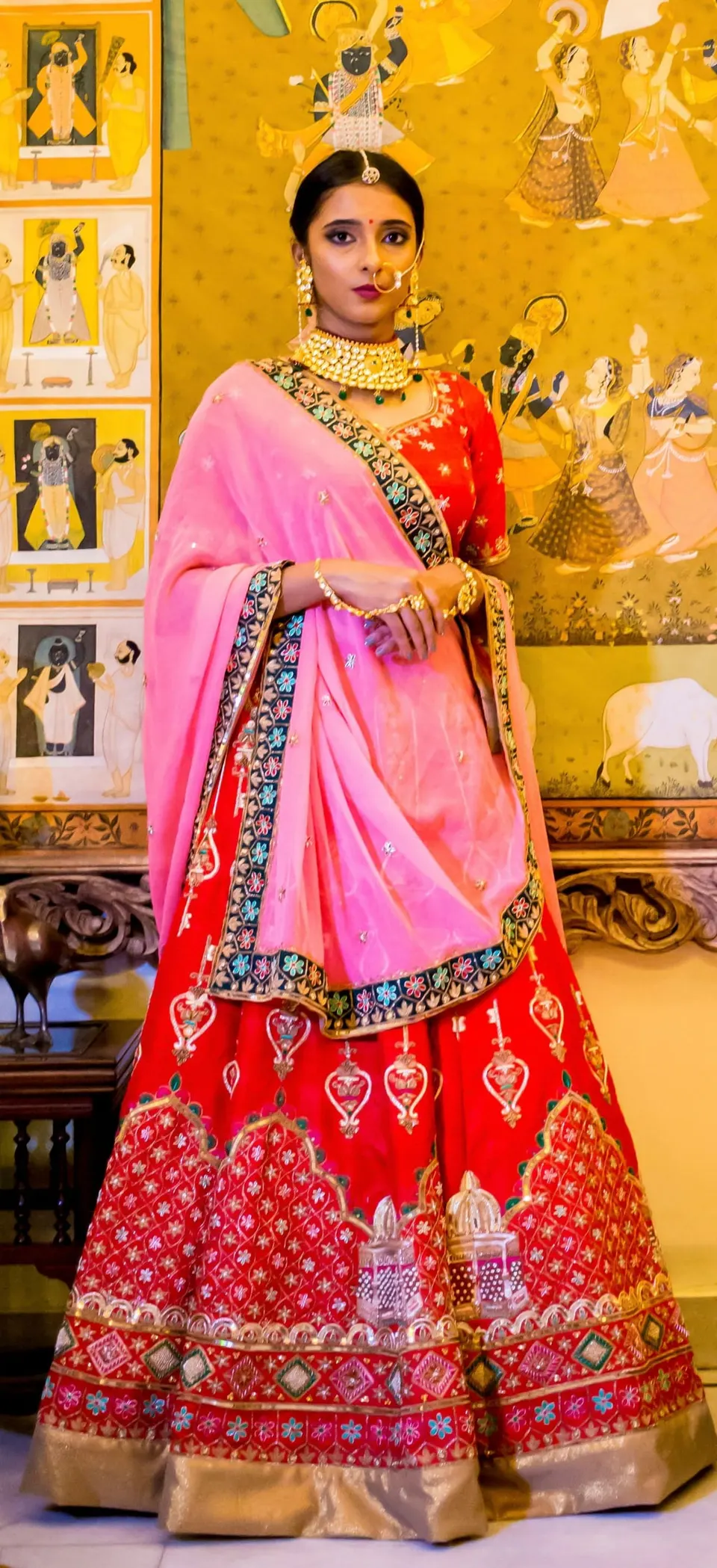
A hand-embroidered bridal lehenga from this studio carries roughly two hundred to six hundred hours of embroidery, depending on what is being made. Four hundred hours of zardozi cannot be hurried without it showing — the tension goes uneven, the metal thread stands up off the cloth in the wrong places, and it is visible to anyone who has seen the real thing.
Read more
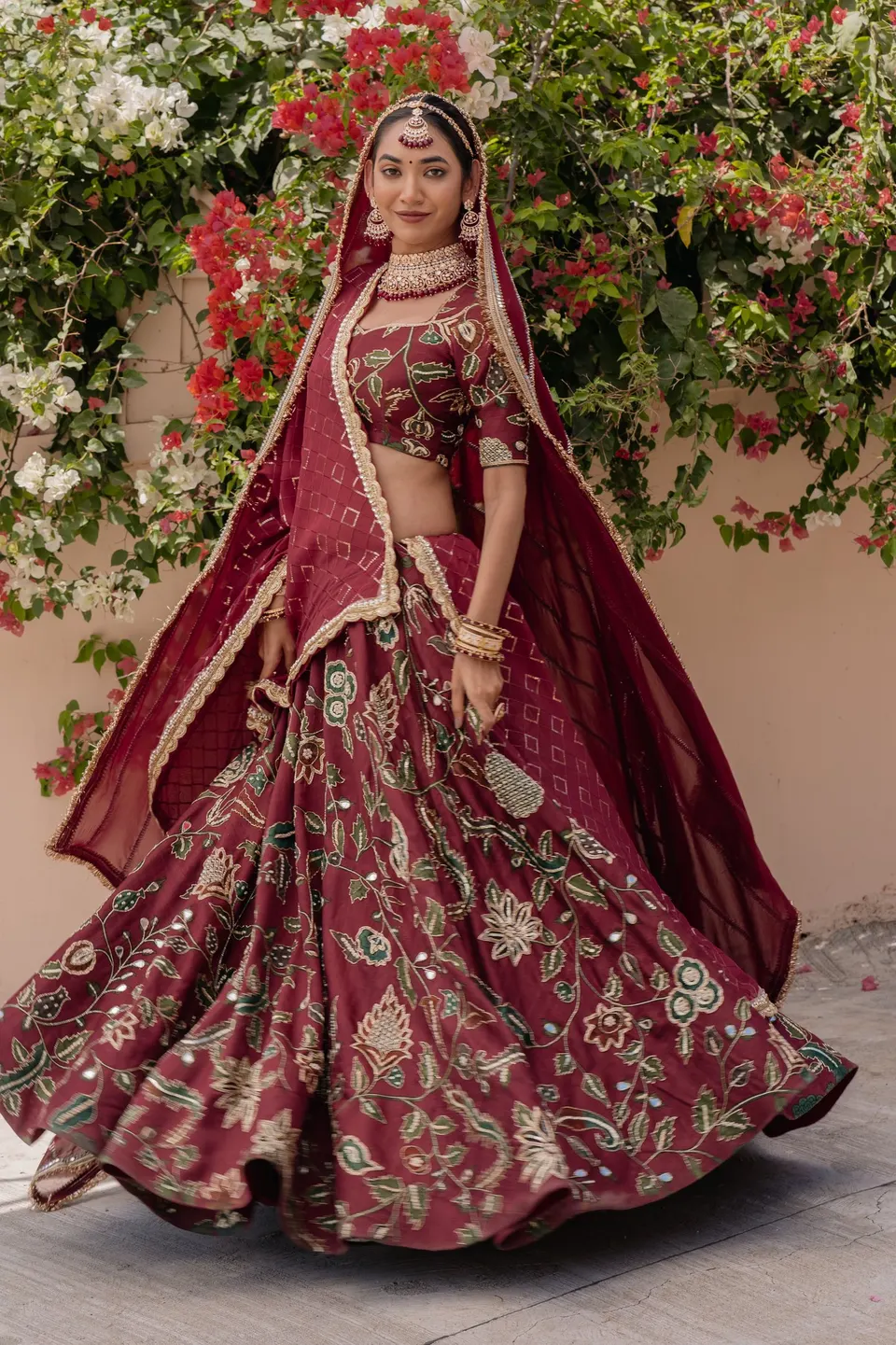
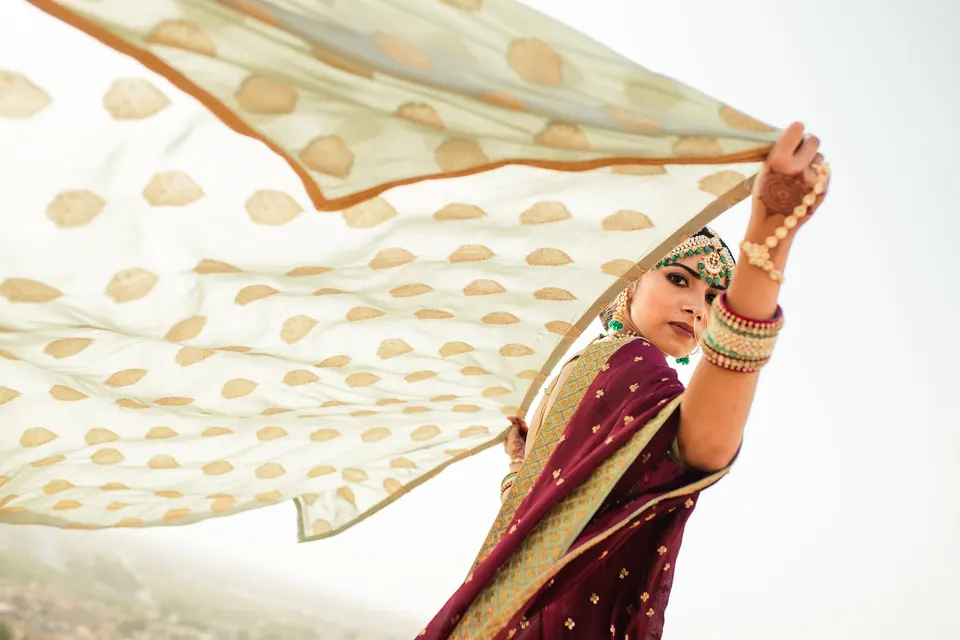
Five crafts do most of that work here. Zardozi, metal thread laid since the Mughal courts. Gota patti, ribbon appliqué from Rajasthan. Aari, the hooked needle that draws a chain stitch fine enough to shade with. Mirror and thread, the shisha that catches light. And bandhani, tied dot by dot before dyeing — traditional in Gujarati bridal wear and still, to our eye, unmatched for a dupatta.
All of it is done in our own studio by karigars we work with directly, rather than sent out. Machine embroidery is faster and cheaper. The difference between the two shows in the third year, not the first.
Weight — the thing nobody warns a bride about
The heaviest lehenga in the room is not the best one, and a bride who cannot sit down comfortably at her own reception has been badly advised. Weight comes from the density of hand work and the ground fabric under it, and both are choices we make together rather than defaults.
Read more
A heavier piece photographs with more depth and holds its shape through a long ceremony. A lighter one lets you dance at the sangeet and stand through a four-hour reception. There is a version of almost any design at either weight, and the conversation about which you want should happen before the embroidery starts, not after.
Colour
Red remains the most asked-for and there is a reason it endures — it takes zardozi better than anything else, and it still shows from across a room and in poor light, which is most wedding photography. Maroon and deep wine do the same work with less heat in them.
Read more
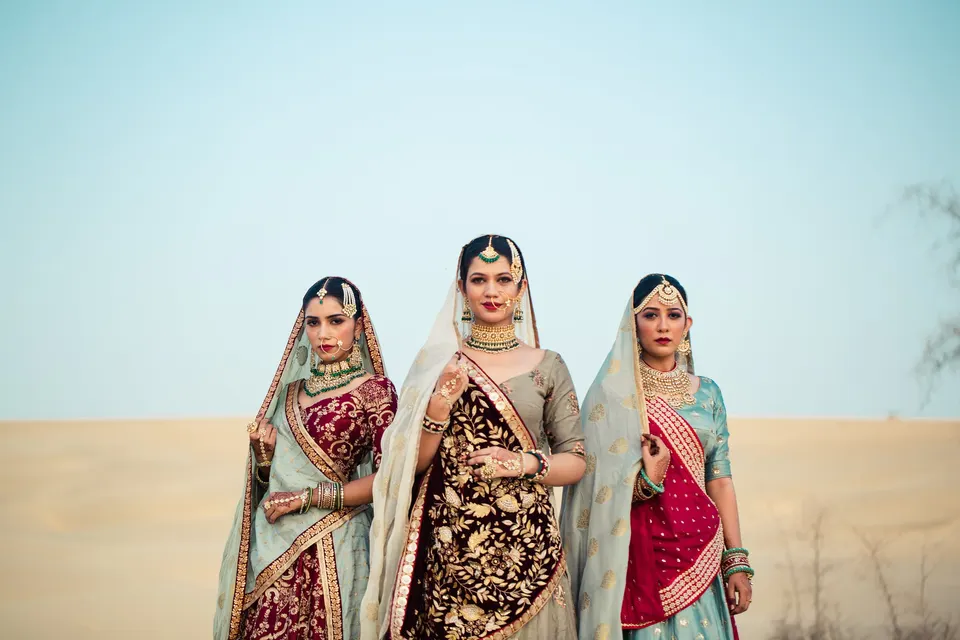
Pastels, ivories and the softer greens and blues have become common for sangeet and reception, and they behave differently: they show every unevenness in the hand work, so they want cleaner, simpler embroidery rather than less of it. If you want a pastel bridal lehenga, say so early — it changes what the embroidery should be, not merely what colour the fabric is.
Panetar, gharchola, and the rest of the week
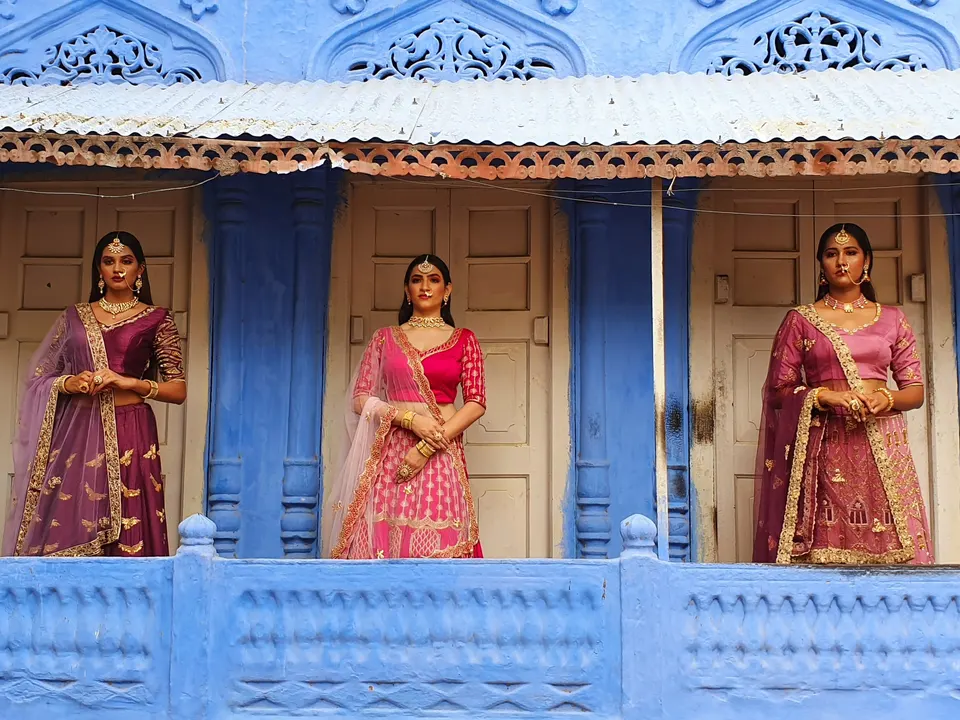
A Gujarati wedding is not one garment. The panetar for the ceremony, the gharchola after it, and then mehendi, sangeet and reception — five occasions, and almost nobody comes to us for one of them.
Read more
The two saris have a page of their own, because they carry meaning a lehenga does not. If you are dressing for the whole week, or dressing a family alongside yourself, come to us early: five pieces on one date is a different conversation from one.
Her mother’s lehenga, made yours
Some of the best work through this studio is a mother’s lehenga brought in a cloth bag, thirty or forty years old, the hand work still sound and the fit impossible. Keeping the original embroidery at the heart of a garment rebuilt to a different body is slow and delicate, and it produces something that cannot be bought.
Read more
Bring it to us before you alter it and before you post it anywhere. Old zardozi and old silk do not always survive what a modern alteration wants to do to them, and we would rather tell you that while the garment is still whole.
When to start
Four weeks at most, start to finish — the drawing and the choice of cloth included, not counted separately from it. Working back from a wedding date, six to eight weeks is comfortable, and less than that depends entirely on what you want made.
Read more
Wedding season compresses this. If your date falls between November and February, the studio is committed months ahead, and the honest answer to "can you still do it" is one we would rather give you in August than in October.
From elsewhere in Gujarat, or from abroad
Brides travel in from Ahmedabad, Surat, Anand, Nadiad, Bharuch and Godhra — usually for the fittings, sometimes for one visit and the rest by post and photograph.
Read more
A good share of the studio’s work now goes overseas. Families in the US, UK, Canada, Australia and the Gulf are measured together on a video call of about twenty minutes, sent photographs as the embroidery grows, and the finished lehenga is couriered.
Questions we are asked
How long does a bridal lehenga take?
Four weeks at most start to finish, carrying roughly two hundred to six hundred hours of hand embroidery depending on the piece. Working back from the wedding, six to eight weeks is comfortable.
What does a bridal lehenga cost?
It depends almost entirely on the hours of hand work in it. A range printed on a page usually turns out not to apply to you, so we would rather give you a real figure for yours. Tell us what you have in mind and your date, and we will be straight with you before you commit to anything.
How many fittings will I need?
Three, usually — one early, one with the embroidery in place, and one near the end. A lehenga gains weight as the hand work goes on, and weight changes how it sits. Fitting it only at the start is how a piece ends up right on a hanger and wrong on a body.
Can you remake my mother’s lehenga?
Yes, and it is some of the studio’s favourite work — the original hand embroidery kept at the heart of a garment rebuilt to your body. Speak to us before you alter it or post it anywhere, so we can tell you honestly what the fabric will take.
Should I choose a heavy lehenga or a light one?
Whichever you can actually wear for the length of your day. Heavier work photographs with more depth and holds its shape; lighter lets you dance and stand for hours. Most designs exist at either weight, and it is a decision to make before the embroidery begins.
Do you make panetar and gharchola?
Yes — the two saris of a Gujarati wedding are among the things this studio is asked for most, in hand bandhani and zari, made new or rebuilt from your mother’s.
I am not in Vadodara. Can you still make my lehenga?
Yes. Brides travel in from across Gujarat. For families outside India we take measurements together on a video call of about twenty minutes, send photographs as the work grows, and courier the finished piece.