Baag A Bahar
बाग़ ए बहार
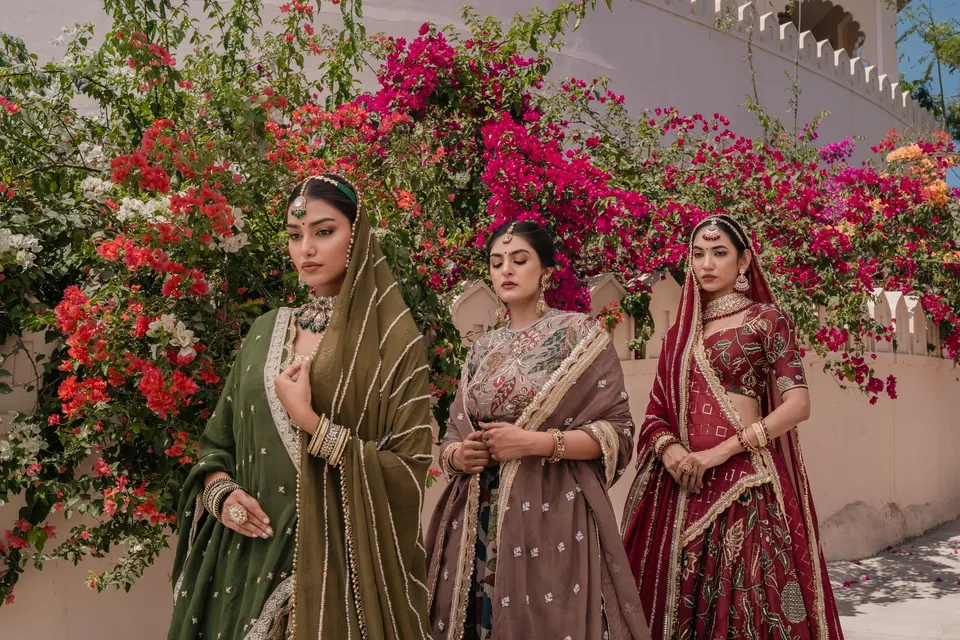
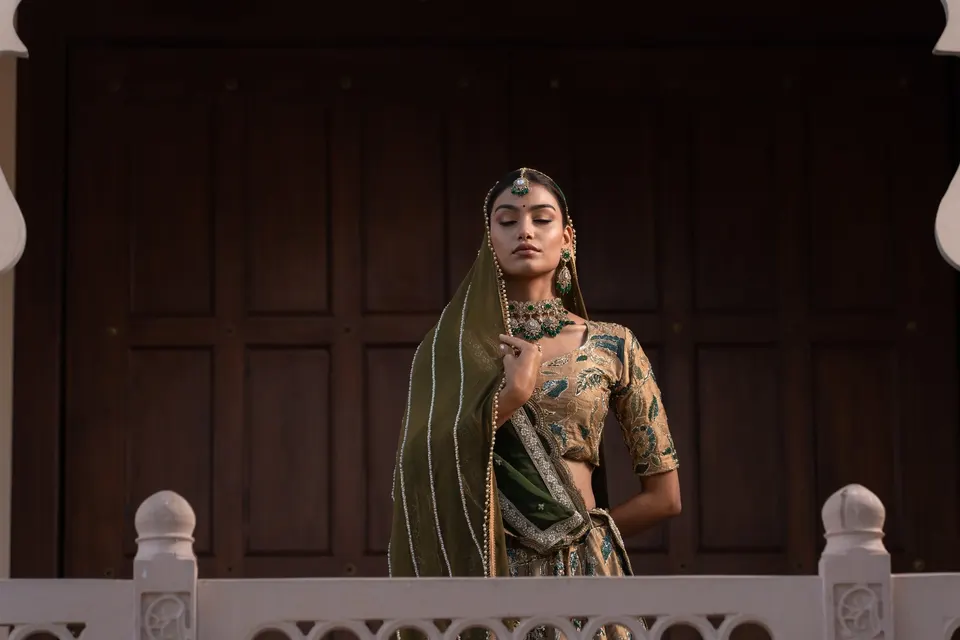
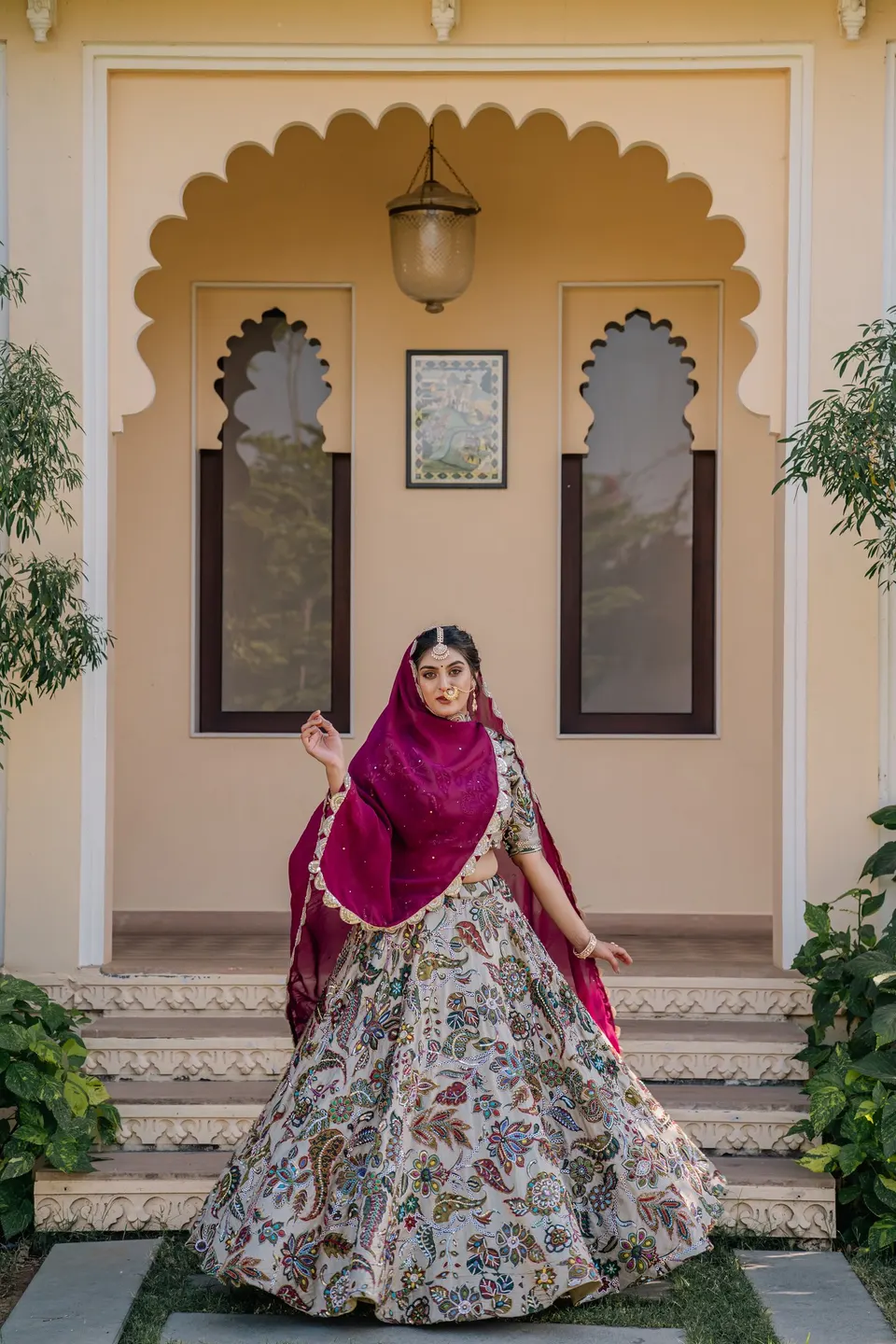
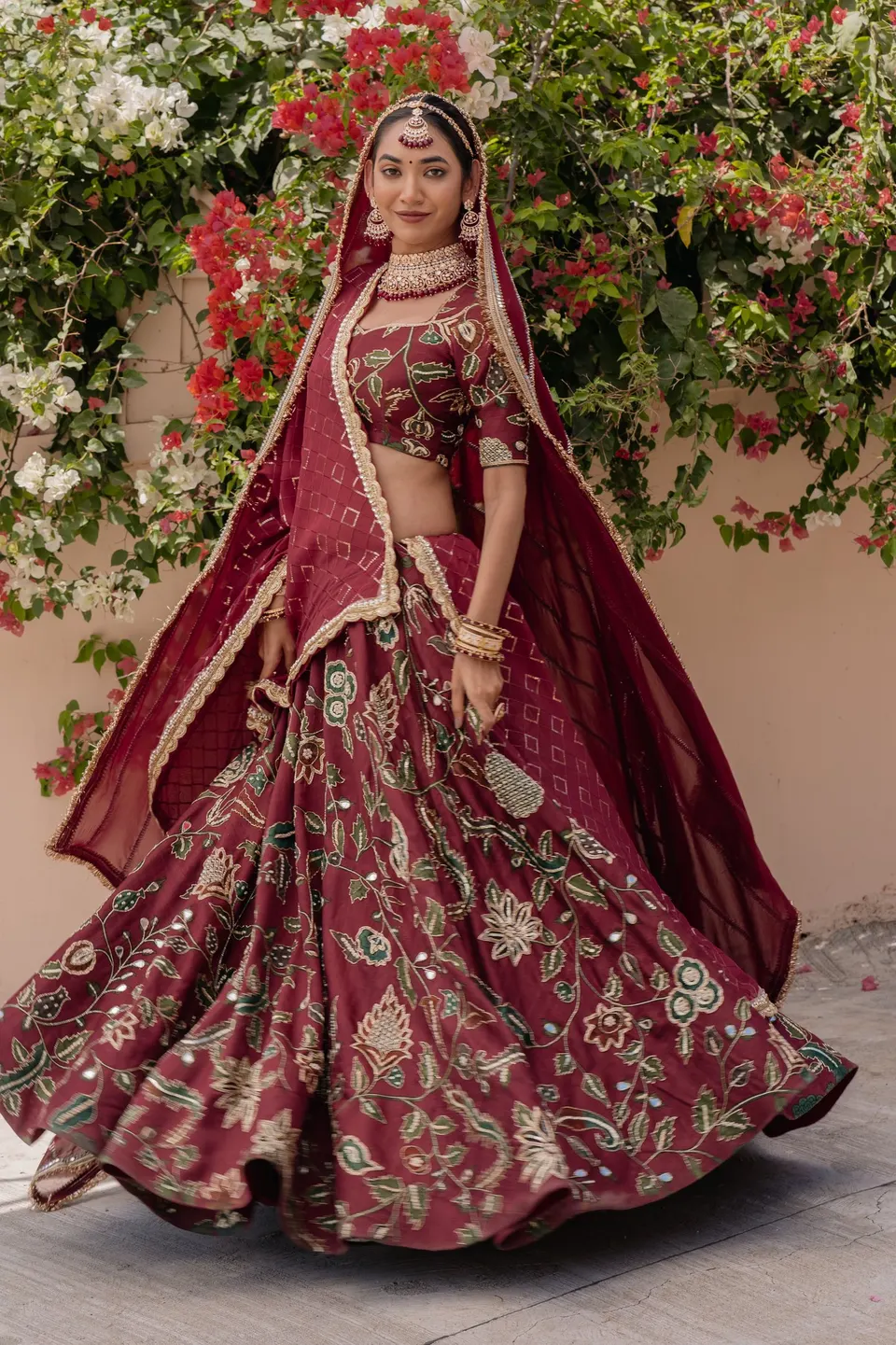
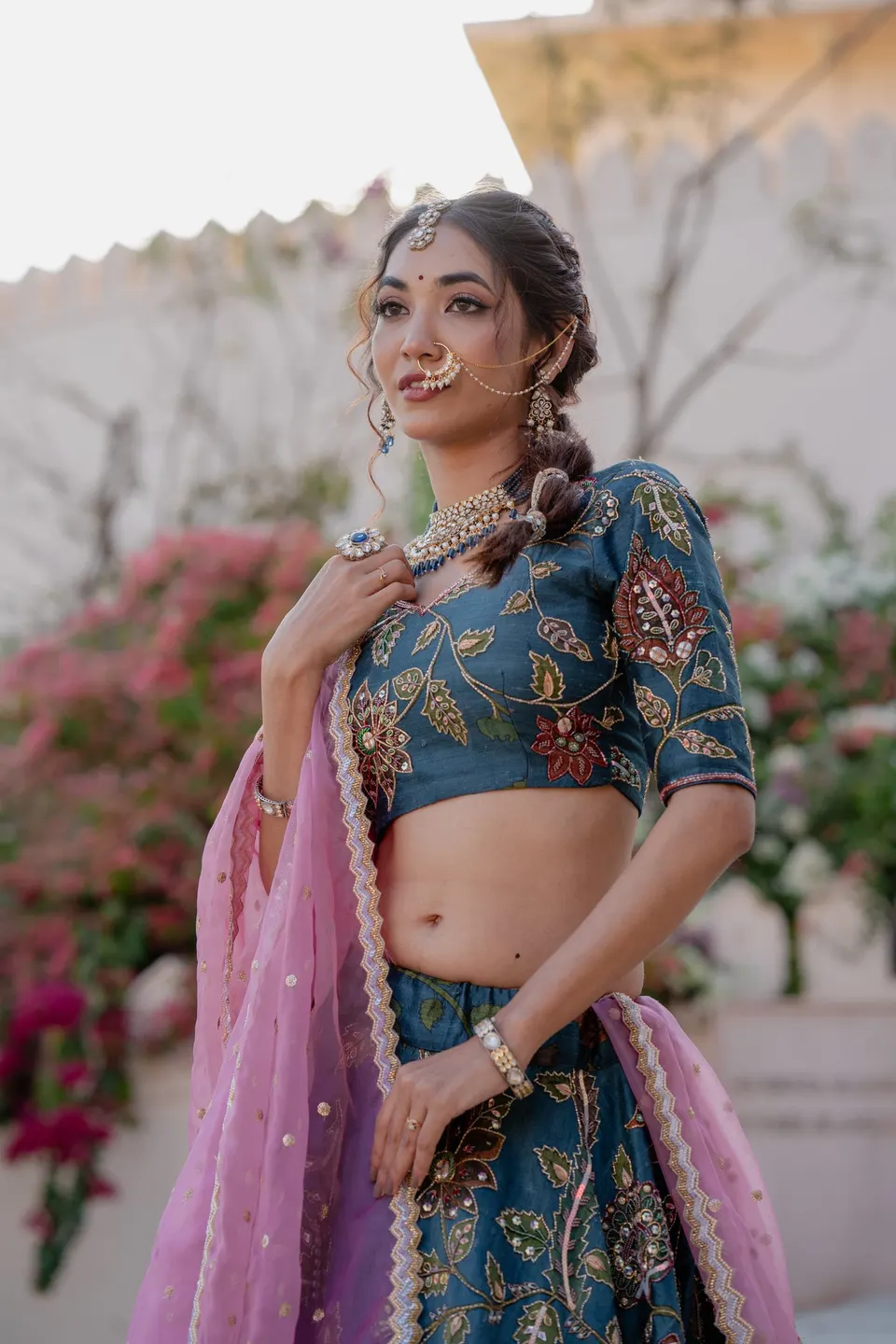
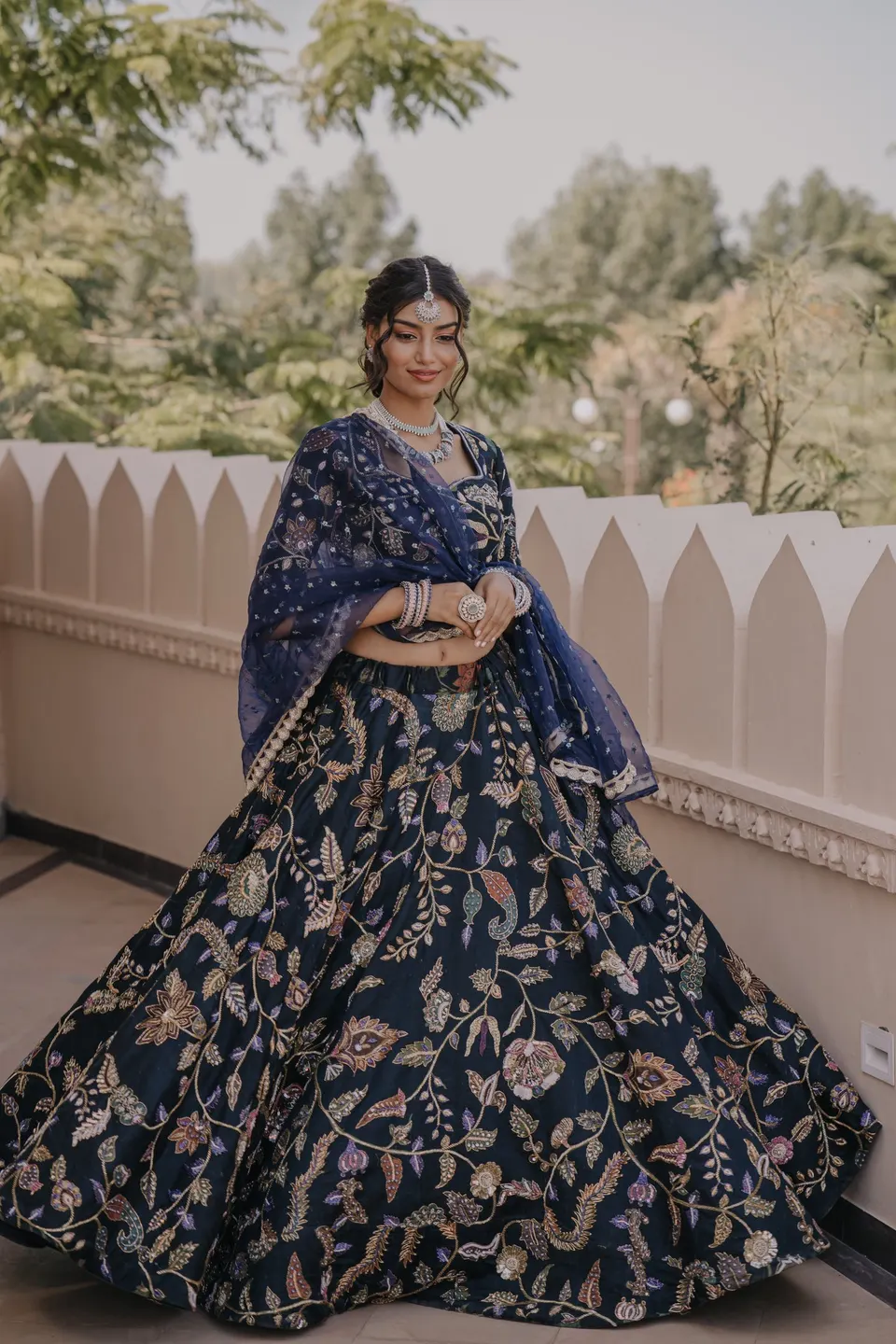
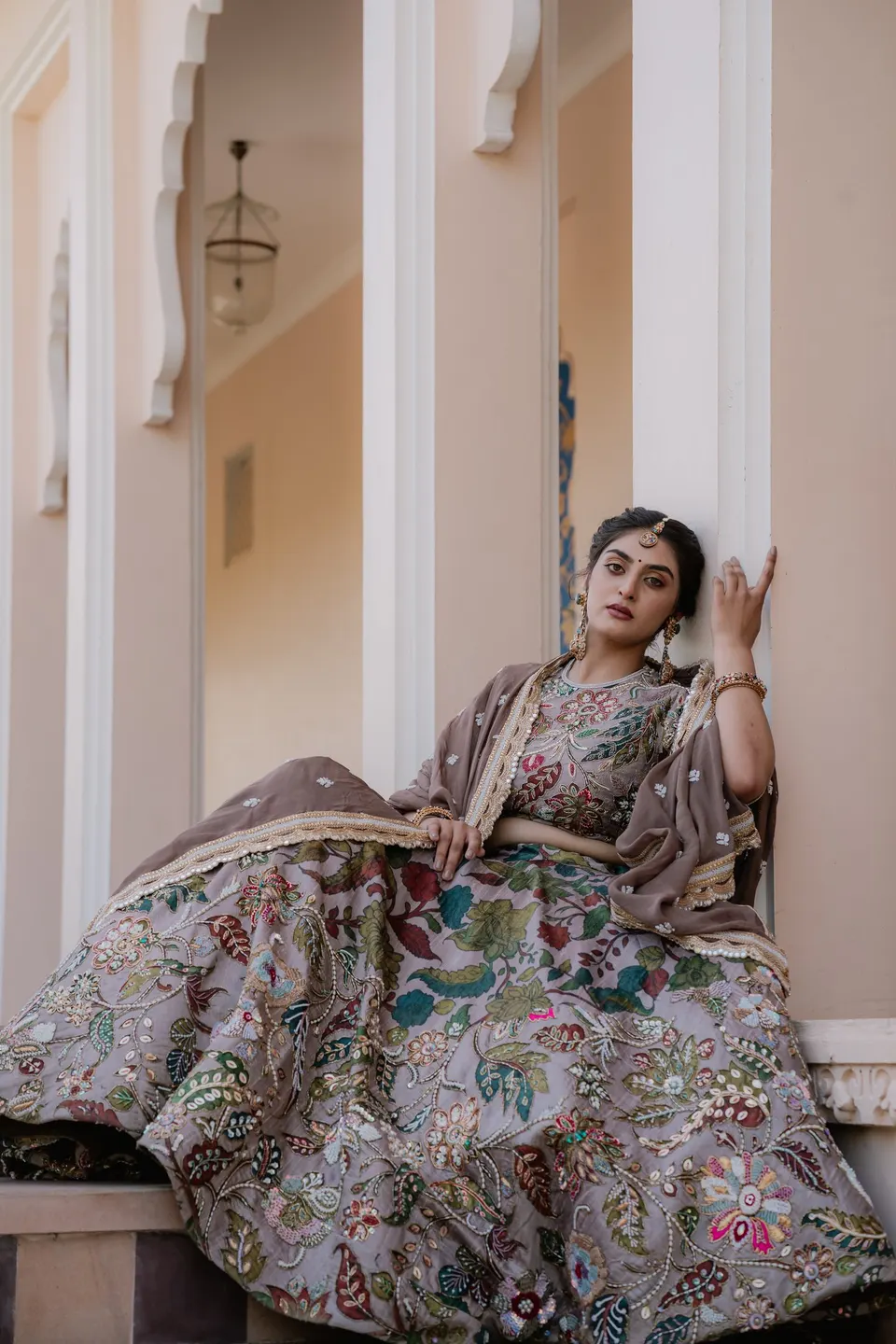
Six pieces in silk, hand-embroidered throughout — the work laid over the whole ground rather than set at a border. This is the heaviest hand work the studio does. Every piece made to measure in the Vadodara studio.
Every look, in order 6
Credits
| Photography | @Preciousgraphy |
| Jewellery | @auraartjewels |
Baag A Bahar is the heaviest hand work this studio does. Six pieces, silk throughout, and on every one of them the embroidery is laid over the whole ground rather than banked at a border and left to thin out across the skirt. That is the decision the collection is built on, and it is the one worth understanding before anything else, because it changes what the garment is to wear.
Ground coverage is expensive in the only currency that matters here, which is hours at the frame. A border can be worked in a fraction of the time and reads well in a photograph taken from the front. Work carried across the whole cloth reads from every angle, in motion, and at the distance people actually stand from a bride.
What full coverage costs, and what it buys
Weight, first. A piece embroidered across its whole ground carries more of it than one embroidered at the hem, and that weight is not an abstraction on a wedding day that runs fourteen hours. It is the reason we say plainly that this is the heaviest work the studio does, rather than presenting it as simply the best.
What it buys is behaviour. Metal thread and mirror catch light from wherever the light happens to be, so a piece worked all over holds its character under a mandap, in a hall, in daylight and in a photograph taken from behind. Embroidery concentrated at a border does one of those things well and the rest indifferently.
It also decides who this collection is for. A bride who wants presence and can carry it is the right reader. A bride who wants to dance for four hours is better served by the Navratri line, where the same studio makes the opposite decision on purpose.
Three crafts, and why these three
Zardozi on two of the six. Metal thread laid over padding and caught stitch by stitch on cloth pulled drum-tight across the adda frame — the technique that gives bridal wear its weight and its glow, and the one that cannot be hurried without the hurry showing on the back of the cloth.
Aari on three. A hooked needle laying a chain stitch fine enough to draw with, which is what lets a floral hold its detail at the scale these pieces work at. Where zardozi gives mass, aari gives line.
Mirror and thread on one. Shisha work, each mirror caught in stitches rather than glued, which is the difference between a mirror that stays on through three fittings and a wedding and one that does not.
Gota patti and bandhani are named nowhere on this collection, and that is deliberate rather than an omission. Gota is ribbon appliqué and bandhani is tied and dyed; neither is embroidery, and no piece here carries either.
Not only a wedding-day collection
One of the six is cut as a bridal piece. Three are reception, one sangeet, one festive. That spread is worth saying out loud, because a collection photographed under a bridal line is usually read as six versions of the same garment, and these are not.
The practical consequence is that a piece here can be commissioned for the function you actually need rather than the one it was shot for. The names carry their own meanings — Shyam Pushpati is Moroccan Morni, Neela Kamal is Splendours of Night, Multani Mahel is Mystic Mocha — and each look has a page explaining the work in it.
Ordering from this collection
Can I still order a piece from Baag A Bahar?
Yes. Nothing in this studio is made in advance, so a collection is a record of work rather than a rack that empties — there is no stock to be out of. Any of the 6 looks photographed here can be made now, cut to your own measurements.
Can a Baag A Bahar look be changed?
Within reason, yes, and most brides change something. Colour is the usual one and is settled at the sketch. Weight, neckline, sleeve length and the density of the hand work are all decisions rather than fixtures. What does not change is that the piece is cut to one body — that is the point of it.
What hand work is in Baag A Bahar?
Zardozi, Aari and Mirror & Thread, worked by hand at frames in the studio on Old Padra Road rather than bought in. The 6 lehengas here are shown with the craft named under each one, and each look has a page explaining the work in it.