Panetar & Gharchola Sarees
Two saris, two moments, one afternoon. Hand bandhani and zari, cut to one body in our own studio — or your mother's, rebuilt so you can wear it.
A Gujarati wedding asks the bride to change once, and the change is the point. She arrives for the ceremony in a panetar — white, red-bordered, given by her mama, her mother's brother. She leaves in a gharchola — red, gridded in gold, given by the family she is joining. Nothing else in the day says as plainly what is happening.
પાનેતર સફેદ રંગનું, લાલ કિનારીવાળું હોય છે અને મામા તરફથી આપવામાં આવે છે; ઘરચોળું લાલ રંગનું, સોનેરી ખાનાંવાળું હોય છે અને સાસરિયા તરફથી મળે છે. બંને પરંપરાગત રીતે બાંધણીના હોય છે. વડોદરામાં અમારા સ્ટુડિયોમાં પાનેતર અને ઘરચોળું તમારા માપ પ્રમાણે બને છે.
Both are traditionally bandhani, and bandhani is tied by hand, dot by dot, before it ever meets dye. That is the craft this studio has worked in since it opened in 2014, and it is why these two garments are the ones we are asked for most often by families in Vadodara.
Panetar and gharchola: the difference
A panetar is the white, red-bordered sari a Gujarati bride wears for the ceremony, traditionally given by her mama. A gharchola is the red, gold-gridded sari given by the groom’s family and worn after it.
| Panetar | Gharchola | |
|---|---|---|
| Colour | White or cream, red border | Red, or in some families green, with a grid of gold zari squares |
| Traditionally given by | The bride’s mama, her mother’s brother | The groom’s family |
| Worn | For the ceremony and the pheras | After the ceremony, then at griha pravesh and the first festival |
| What it marks | The bride as her father’s daughter | The bride joining another family |
| Craft | Traditionally bandhani, tied by hand, dot by dot, before it is dyed | |
The panetar
White or cream ground, red border, and — where a family keeps to it — the bandhani worked fine across the body of the sari. It is worn for the ceremony, for the pheras, and it belongs to her father's house.
The custom is that it comes from the mama. A great many brides now buy their own, or have one made, and that changes nothing about what it means on the day. What it does change is who we are fitting it to, and how much notice we have.
The gharchola
Red, or in some families green, and unmistakable: a grid of gold zari squares laid across the whole sari, with bandhani tied inside them. Twelve squares, fifty-two, more — the count varies by family and by region, and anyone who tells you there is only one correct number has not met enough Gujarati families.
It comes from the groom's side and is worn after the ceremony — and then, in most houses, again at griha pravesh, and at the first festival, and for years afterwards. Of the two, it is the one that gets worn.
Made new, or rebuilt from hers
Some of the best work that comes through this studio is a mother's gharchola brought in a cloth bag, forty years old, the zari still sound and the fit hopeless. Keeping the original hand work at the heart of a garment rebuilt to a different body is delicate and it is slow, and it produces something nobody can buy.
Bring it to us before you alter it, and before you post it anywhere. Old bandhani and old zari do not always take what a modern alteration wants to do to them, and we would rather tell you that while the sari is still whole.
From the bridal work
All bridal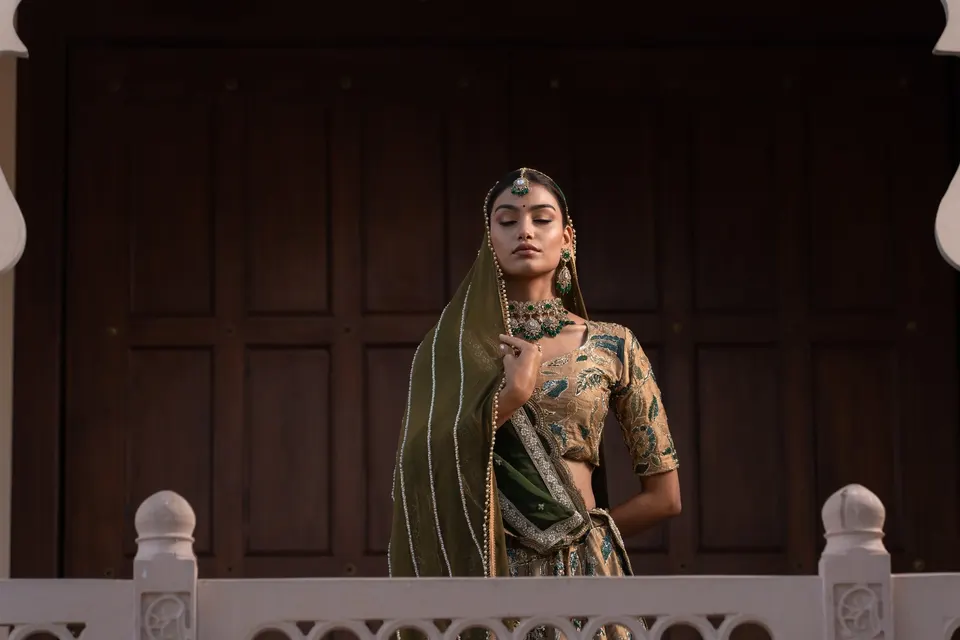
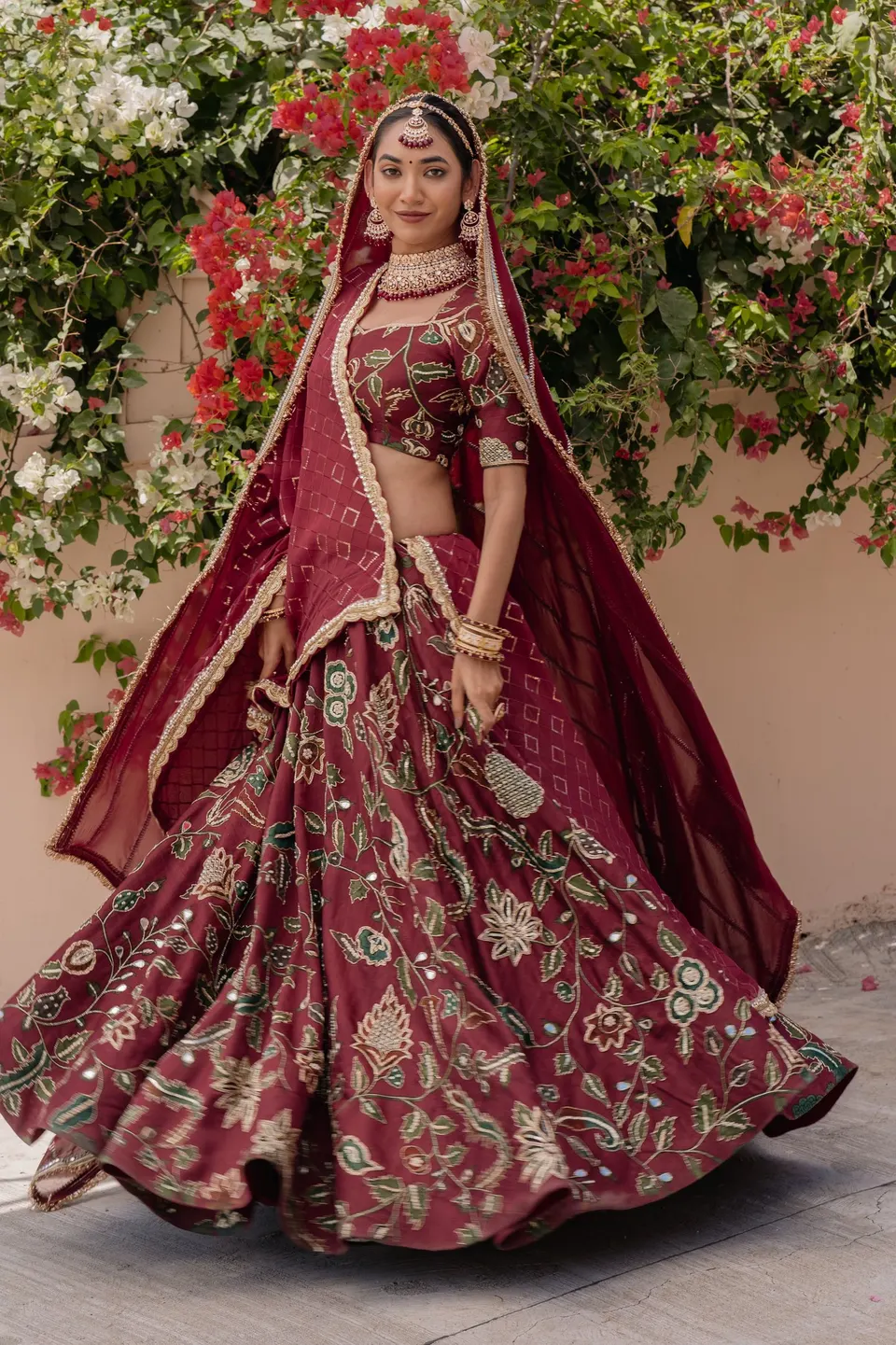
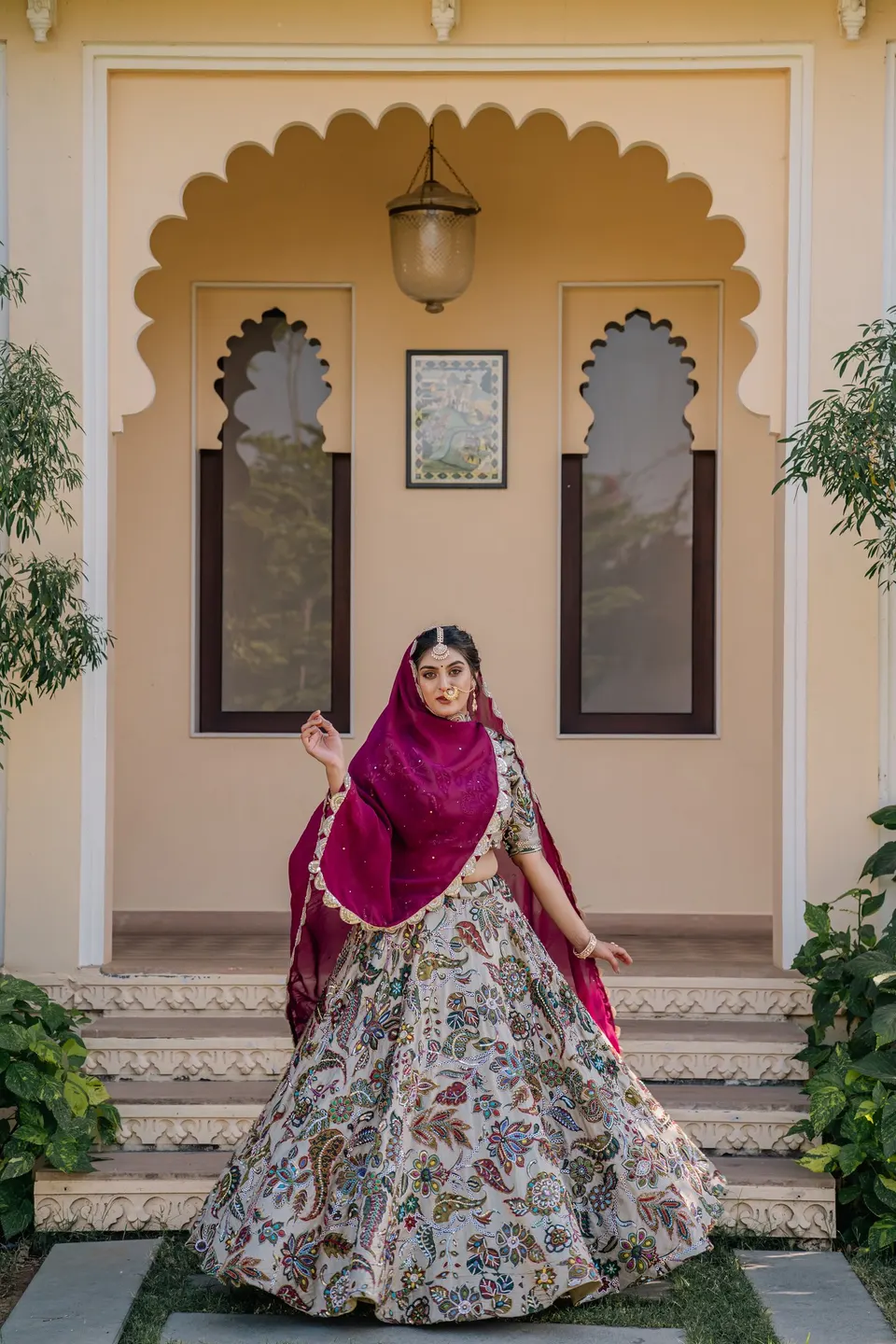
The rest of the week
Almost nobody comes to us for one garment. A Gujarati wedding runs to a week — mehendi, sangeet, the ceremony, the reception — and the saris are one afternoon of it. If you are dressing for the whole week, or dressing a family, come early: several pieces on one date is a different conversation from one.
The panetar usually arrives at the mameru, from the mama’s family, a day or two before it is worn. Every ritual of the wedding and what to wear to it is on Gujarati wedding rituals, in order.
Questions we are asked
What is a panetar saree?
Traditionally the sari a Gujarati bride wears for the wedding ceremony itself — white or cream, with a red border, and very often bandhani. It is customarily a gift from her maternal uncle, her mama, which is why it carries the weight it does even in families who keep little else of the old order.
What is a gharchola saree, and how is it different from a panetar?
The gharchola is the sari traditionally given by the groom’s family and worn after the ceremony — red, or sometimes green, laid out in a grid of gold zari squares with bandhani worked inside them. The panetar marks the bride arriving as her father’s daughter; the gharchola marks her leaving as part of another family. That is the whole reason there are two.
Do I need both?
No. Many brides wear both, some wear one, and plenty now wear a lehenga for the ceremony and keep a gharchola for the reception or the griha pravesh. There is no rule we would ever quote at you — tell us how your family does it and we will work to that.
Can you rebuild my mother’s panetar or gharchola?
Yes, and it is some of the studio’s favourite work — keeping the original bandhani and zari at the heart of a garment rebuilt to your body. Speak to us before you alter or post anything, so we can tell you honestly what the fabric will take.
Is bandhani suitable for a bridal outfit?
Traditionally so in Gujarat, in exactly these two garments. Bandhani is tied dot by dot before it is dyed, and on a bridal piece the density of that tying is most of what separates one from another.
I am not in Vadodara — can you still make it?
Yes. Brides travel in from Ahmedabad, Surat, Anand, Nadiad and across Gujarat, usually for one fitting. For families outside India we take measurements together on a video call of about twenty minutes and courier the finished piece.
How long does a panetar or gharchola take?
Both sit inside the same calendar as any bridal order — four weeks at most, start to finish. Tell us your date and what you have in mind and we will give you the real answer for your piece.
How much does a panetar or gharchola cost?
It is priced per order, because the work differs from one piece to the next. Tell us what you have in mind and we will quote before any work begins. Nothing is started before you have the figure.
Which blouse goes with a panetar or a gharchola?
The blouse is cut to your body like everything else we make, and its neckline, sleeve and back are decided with you at the appointment. If you want a blouse you can wear again with another sari or a lehenga, say so at the start, so it is designed that way.
Can a panetar or gharchola be in a colour other than the traditional one?
Traditionally the panetar is white or cream with a red border, and the gharchola is red, or in some families green. Customs vary by family. If you are thinking of another colour, such as rani pink or wine, tell us what your family expects and we will work to that.
Tell us your date
Bring the date, the family's customs, and a photograph of anything you are hoping to rebuild. We will tell you plainly what is possible in the time.