Grah Shanti & Mameru Outfits
Two rituals that often share a day: a long puja seated on the floor, and the mama’s family arriving with gifts. What the bride, her parents and the mama’s side wear to each.
For grah shanti, wear a traditional outfit you can sit in for a long puja — a saree or a light lehenga for the women, a kurta set for the men — in auspicious colours such as red, yellow, orange, green or pink, and avoid black. For mameru, the bride wears a festive saree or lehenga, often something from her mama’s gifts, and the mama’s family dresses as the hosts of the moment.
Grah shanti is a puja to the nine planets, asking for a peaceful married life. It is held at each home a day or two before the wedding, with the parents seated beside the bride or the groom, and it is long. Mameru is the ritual in which the bride’s mama, her mother’s brother, comes with his family and his gifts. In many families both fall on the same day, sometimes with the pithi in between.
They ask opposite things of a garment. The grah shanti outfit has to be sat in, quietly, for a couple of hours. The mameru outfit is worn for one of the most affectionate and most photographed moments of the wedding.
Grah shanti outfit for the bride
Traditional and comfortable: a silk or cotton-silk saree, a light lehenga or a long anarkali, in red, yellow, orange, green or pink. Hand work stays moderate — the puja is the point, not the clothes. What matters most is the cut. A blouse that pulls when she leans forward to offer something to the fire, or a skirt with no room at the knee, makes two hours on the floor feel like four.
Grah shanti outfit for the parents and the men
The bride’s parents sit with her through the ritual and appear in every photograph of it. Her mother usually wears a silk saree; her father and the men of the family a kurta with churidar or dhoti pants, in ivory, saffron, yellow or maroon. On the groom’s side the same applies at his home. Black is avoided at a puja in most families, and many avoid plain white for the women.
What mameru is
The mama and his family bring the mameru: clothes, jewellery and sweets for the bride and often for her mother, carried in decorated trays, sometimes with songs. By custom the gifts include the panetar, the white and red sari the bride will wear to the ceremony. It is the mama’s moment, and his family’s, and it is usually crowded and joyful.
What the bride wears at mameru
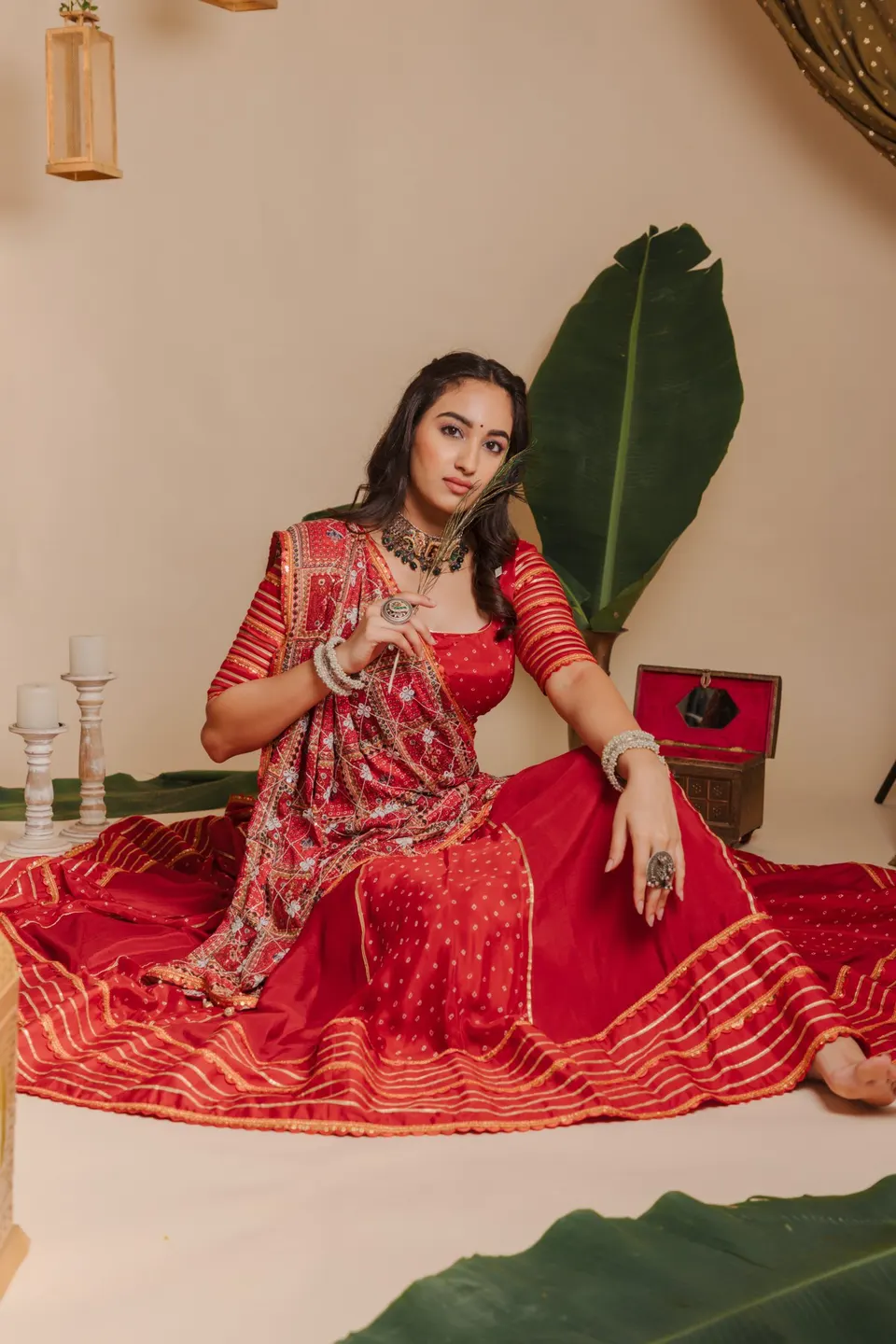
A festive saree or lehenga, brighter and more celebratory than the grah shanti outfit. In some families the bride changes into an outfit from the mameru gifts during the ritual itself; ask how yours does it, because it decides whether one outfit is needed or two. Either way, this is a garment for photographs with a crowd around her, so it wants colour and hand work that reads from a distance.
What the mama’s family wears
The mama, the mami and their children are the hosts of this moment and dress like it: festive silk sarees or lehengas for the women, kurta sets or bandhgala-style jackets for the men, often in one colour family so they read as one group arriving. If the mama’s family lives abroad, which is common, their outfits can be made here alongside the bride’s and collected when they fly in.
The panetar in the mameru
Because the panetar comes from the mama, families often order it with the mameru outfits — and a mama who lives in London or Toronto may never see it made. It can be commissioned from abroad, measured on the bride, and kept here until the family arrives. Our panetar and gharchola page explains the two saris, and how a mother’s panetar can be rebuilt for her daughter.
When both fall on one day
Grah shanti in the morning, pithi around midday, mameru in the afternoon is a common pattern. That is three outfits, or two with a careful choice. Plan them together so the colours differ, so the turmeric meets the right one, and so the bride is not changing more often than the day allows.
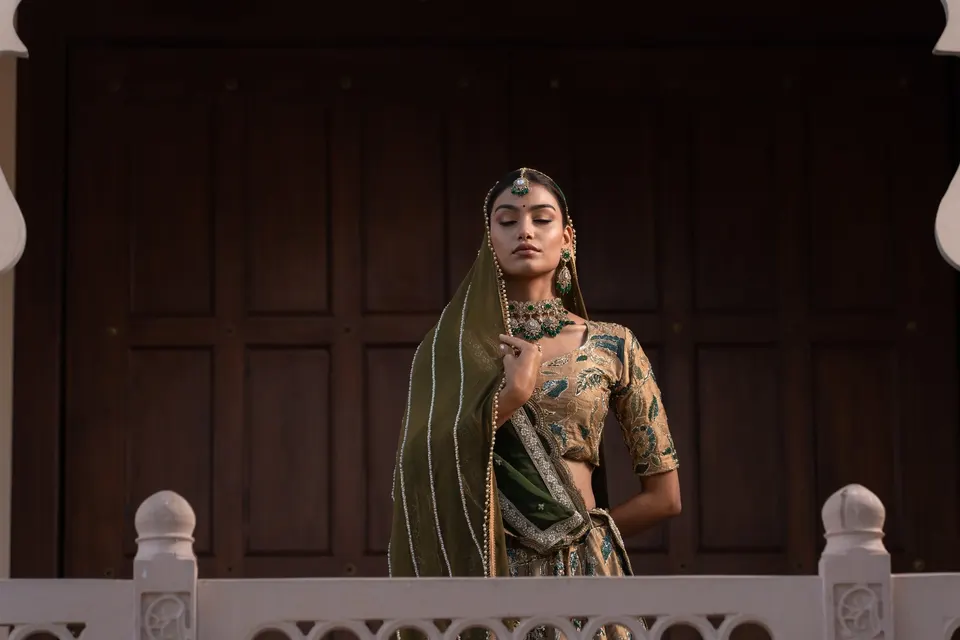
From the collections Festive, bridal and bandhani pieces from the collections, made by hand on silk.
Every collection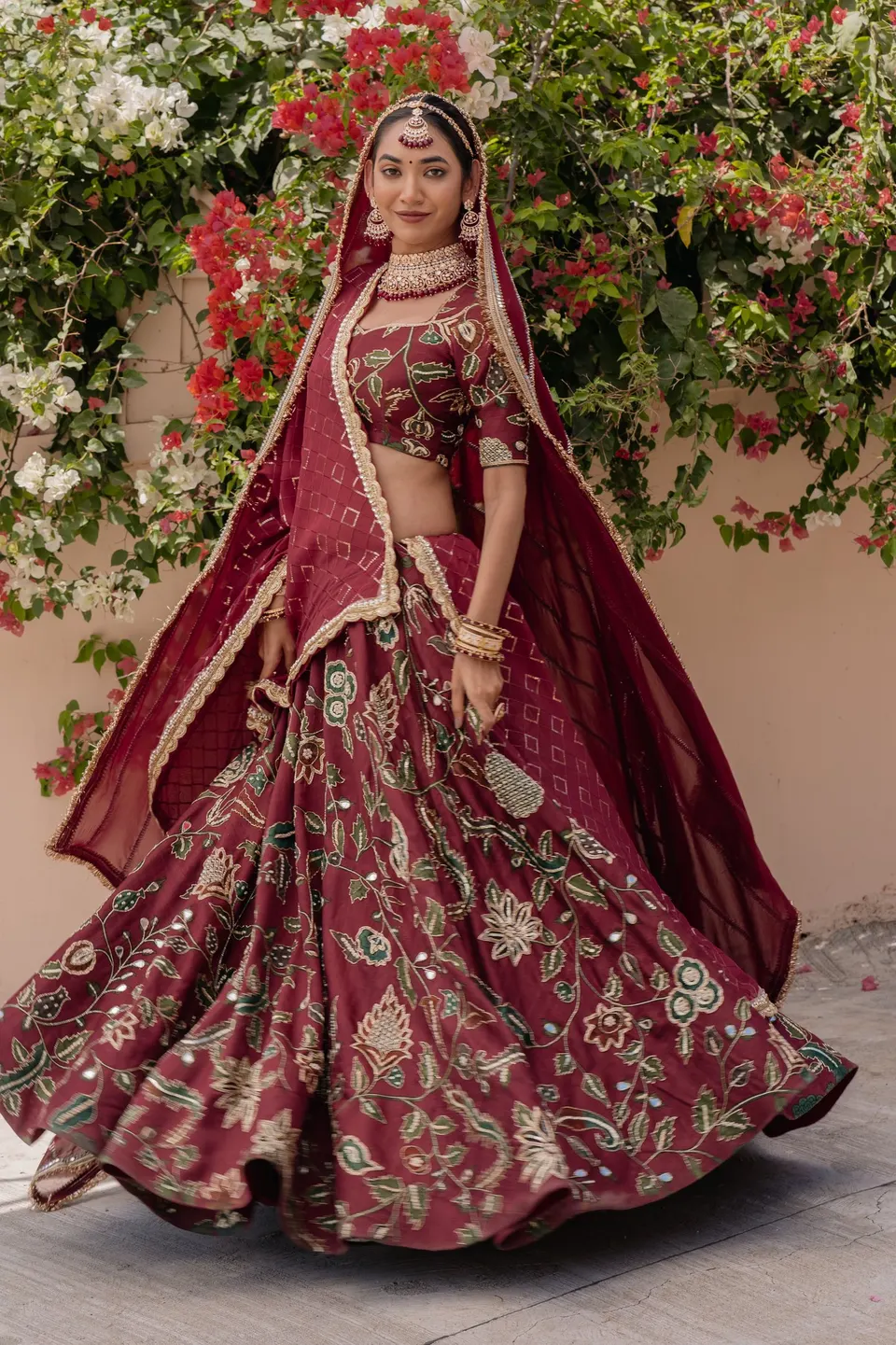
Questions we are asked
What should a bride wear for grah shanti?
A traditional saree, light lehenga or anarkali in red, yellow, orange, green or pink, with moderate hand work and a cut she can sit in on the floor for a couple of hours. Black is avoided at a puja in most families.
What should a woman wear to a grah shanti puja?
A silk or cotton-silk saree or a light lehenga in an auspicious colour, comfortable for sitting on the floor. Avoid black, and ask whether the family avoids plain white.
What is mameru?
The ritual in which the bride’s mama, her mother’s brother, and his family bring gifts of clothes, jewellery and sweets for the bride. By custom the gifts include the panetar she wears to the ceremony.
What does the bride wear at mameru?
A festive saree or lehenga, brighter than her grah shanti outfit. In some families she changes into an outfit from the mameru gifts during the ritual, so ask how yours does it.
Can the mama order the panetar from abroad?
Yes. The panetar can be commissioned from abroad, the bride measured on a video call of about twenty minutes, and the sari kept in Vadodara until the family arrives, or couriered.
Read next
Tell us the date and who you are dressing
Bring the date, the occasion and how many people. We will tell you plainly what can be made properly in the time — from the studio in Vadodara, or on a video call from wherever you are.