For brides in Kutch
The furthest corner of Gujarat, and the home of two of the crafts worked in this studio. Ordering from there works exactly as it does from abroad.
Gandhidham is about 450 km from the studio in Vadodara — the furthest point in Gujarat this studio makes for, and far enough that an order from Kutch runs the way an overseas one does: the design settled on WhatsApp, measurements taken together on a video call of about twenty minutes, progress photographs as the embroidery grows, and the finished piece couriered. Bandhani and mirror work, two of the five crafts worked here by hand, both come from Kutch.
Bandhani is the tie-resist dye of Kutch and Saurashtra, tied by hand dot by dot before the cloth ever meets dye. Mirror work — shisha, each mirror caught in hand stitches — is Kutch too, and it is the reason a chaniya choli reads from across a garba ground.
Both are worked in this studio. So a bride in Kutch is not being sold something foreign to her; she is asking for the crafts of her own region, made into a garment cut to her body rather than bought off a rack.
गांधीधाम और कच्छ की दुल्हनों के लिए: ब्राइडल लहंगा, पानेतर, घरचोळू और शादी के सभी कपड़े वडोदरा के हमारे स्टूडियो में आपकी नाप पर बनते हैं और हाथ की कढ़ाई से सजाए जाते हैं। ऑर्डर विदेश के ऑर्डर की तरह चलता है: डिज़ाइन और रंग व्हाट्सऐप पर तय होते हैं, नाप वीडियो कॉल पर ली जाती है, और तैयार कपड़े कूरियर से भेजे जाते हैं।
ગાંધીધામ અને કચ્છની દુલ્હનો માટે: બ્રાઇડલ લહેંગા, પાનેતર, ઘરચોળું અને લગ્નના બધા કપડાં વડોદરાના અમારા સ્ટુડિયોમાં તમારા માપ પ્રમાણે બને છે અને હાથના ભરતકામથી શણગારાય છે. ઓર્ડર વિદેશના ઓર્ડરની જેમ ચાલે છે: ડિઝાઇન અને રંગ વૉટ્સએપ પર નક્કી થાય છે, માપ વીડિયો કૉલ પર લેવાય છે, અને તૈયાર કપડાં કુરિયરથી મોકલાય છે.
Your region’s crafts, and what a studio adds to them
Kutch does not need a lesson in embroidery from anyone. What a studio like this adds is not the craft but the garment: the design, the cutting, the fit, and the decision about where the hand work goes and where it deliberately does not.
Density in one region — a bodice, a border, a single panel — photographs better and wears lighter than an even spread across a whole garment. A chaniya choli has to be danced in for nine nights, which makes weight a design decision rather than a measure of value. That judgement is what is being commissioned.
Most of what is sold as hand embroidery in India today is machine-made, and most of what really is hand-made passes through several workshops before it reaches the person whose name is on the label. Here it is done at frames in one room on Old Padra Road, by karigars who work with this studio directly.
Four hundred and fifty kilometres, handled properly
Nobody is going to drive from Gandhidham for a fitting three times, and the studio does not pretend otherwise. Kutch orders run on exactly the process built for families in the US, UK, Canada and Australia, which is a well-worn path rather than an improvisation.
The design, the colours, the embroidery and the budget are settled on WhatsApp before anything is cut. Measurements are taken with you on a video call of about twenty minutes — Nirali watches where the tape sits and corrects it as you go, which is why they come out right without anyone being in the room. Photographs come as the piece grows. The finished garment is couriered, built with seam allowance so a local tailor can make a small adjustment if one is ever needed.
Plan to the date you need the piece in hand rather than the wedding date, and the schedule is built backwards from there.
What gets made for Kutch families
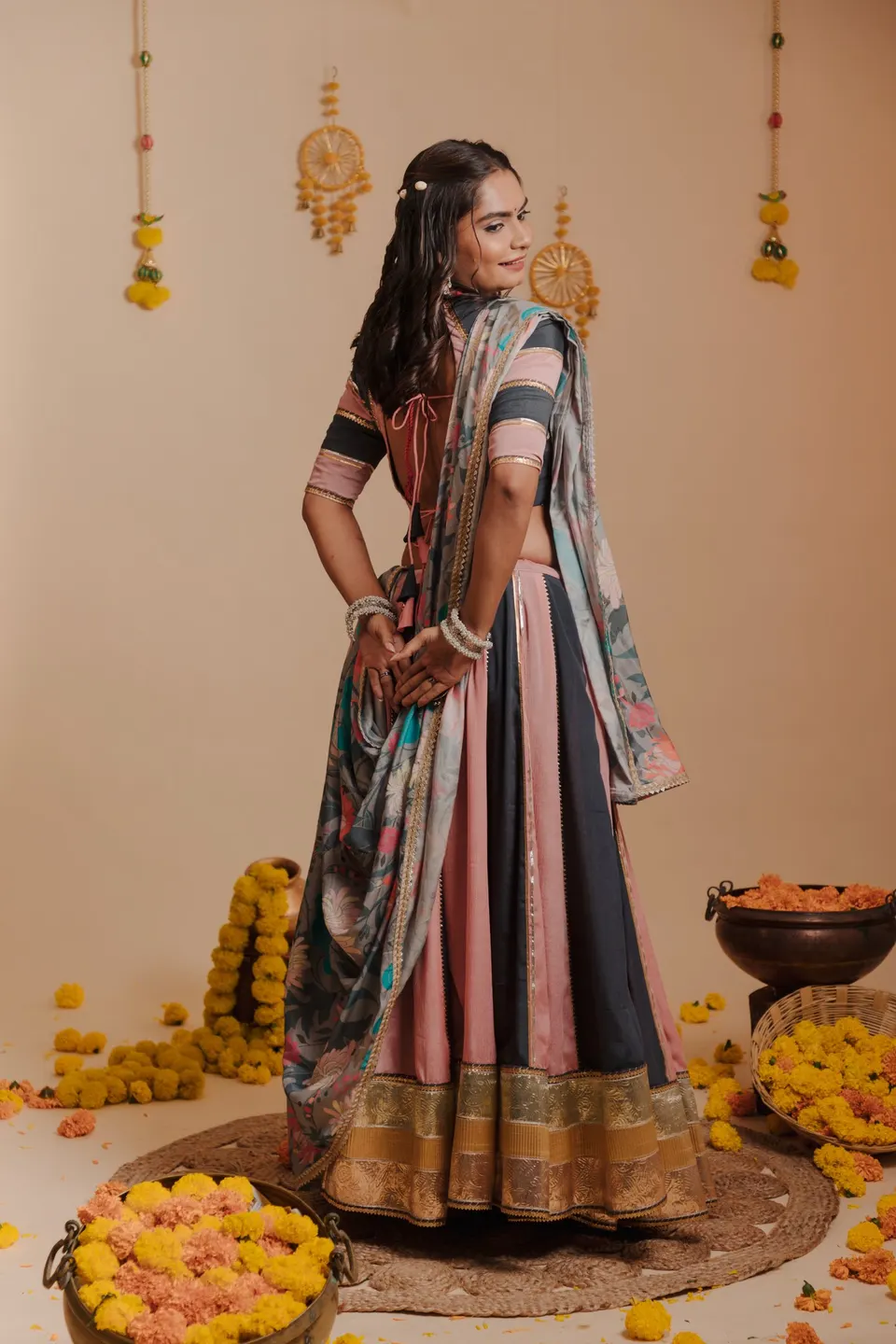
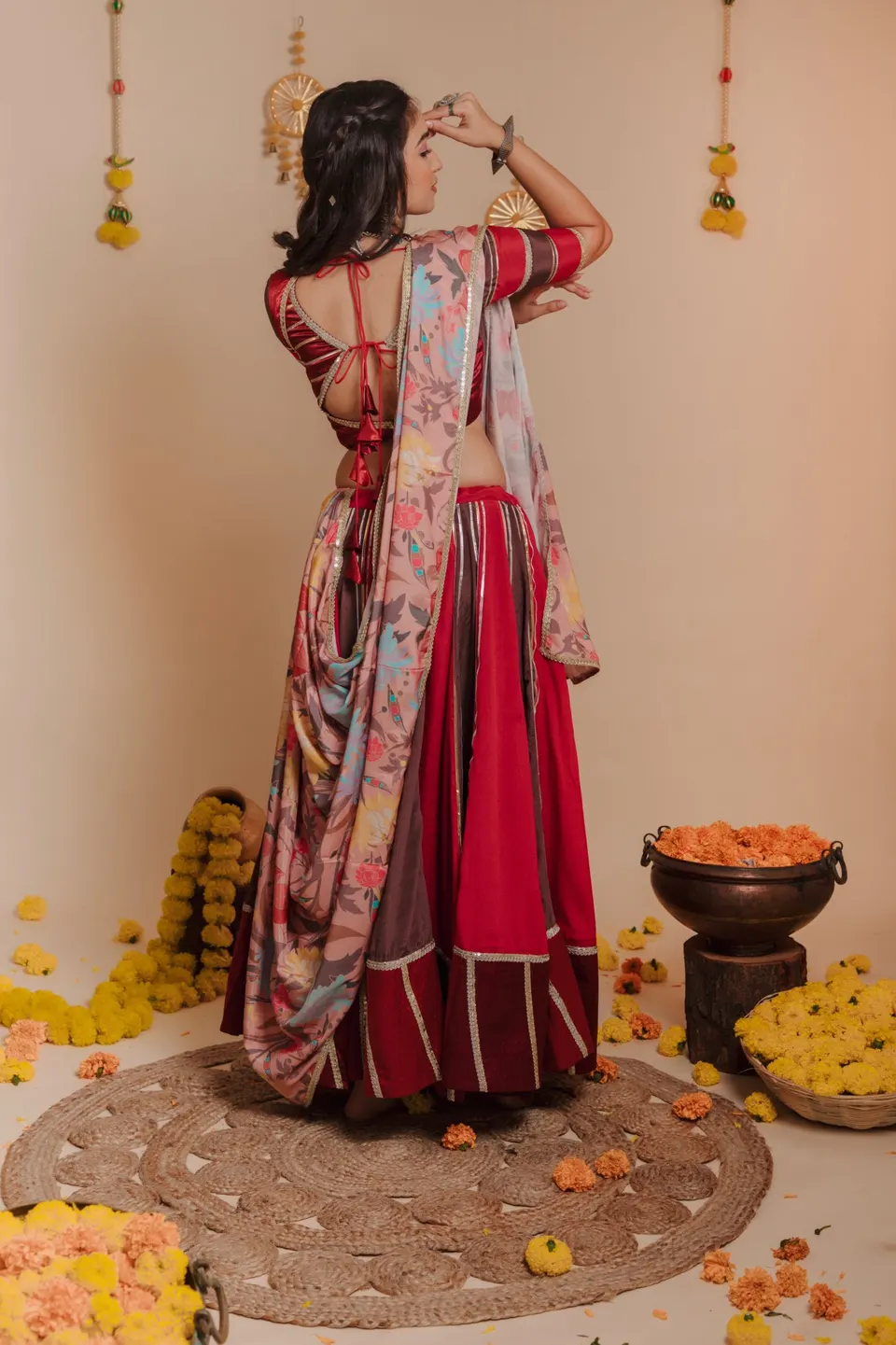
Bridal lehengas, panetar and gharchola, and the wedding week around them — mehendi, haldi, sangeet and reception — for the bride and everyone standing near her. Chaniya cholis for Navratri. Festive wear for Diwali.
Heirlooms too: a mother’s panetar, gharchola or lehenga rebuilt to a daughter’s body with the original hand work kept at its heart. Send photographs first and we will say honestly what can be kept.
When to start
A bridal order is four weeks at most start to finish, and six to eight weeks before the wedding is comfortable. From this distance, add time for the courier and count backwards from the day you want it in hand.
For Navratri, start earlier than feels necessary. The studio takes a limited number of orders at a time, which is the direct consequence of not sending the work out.
From the collections
Every collection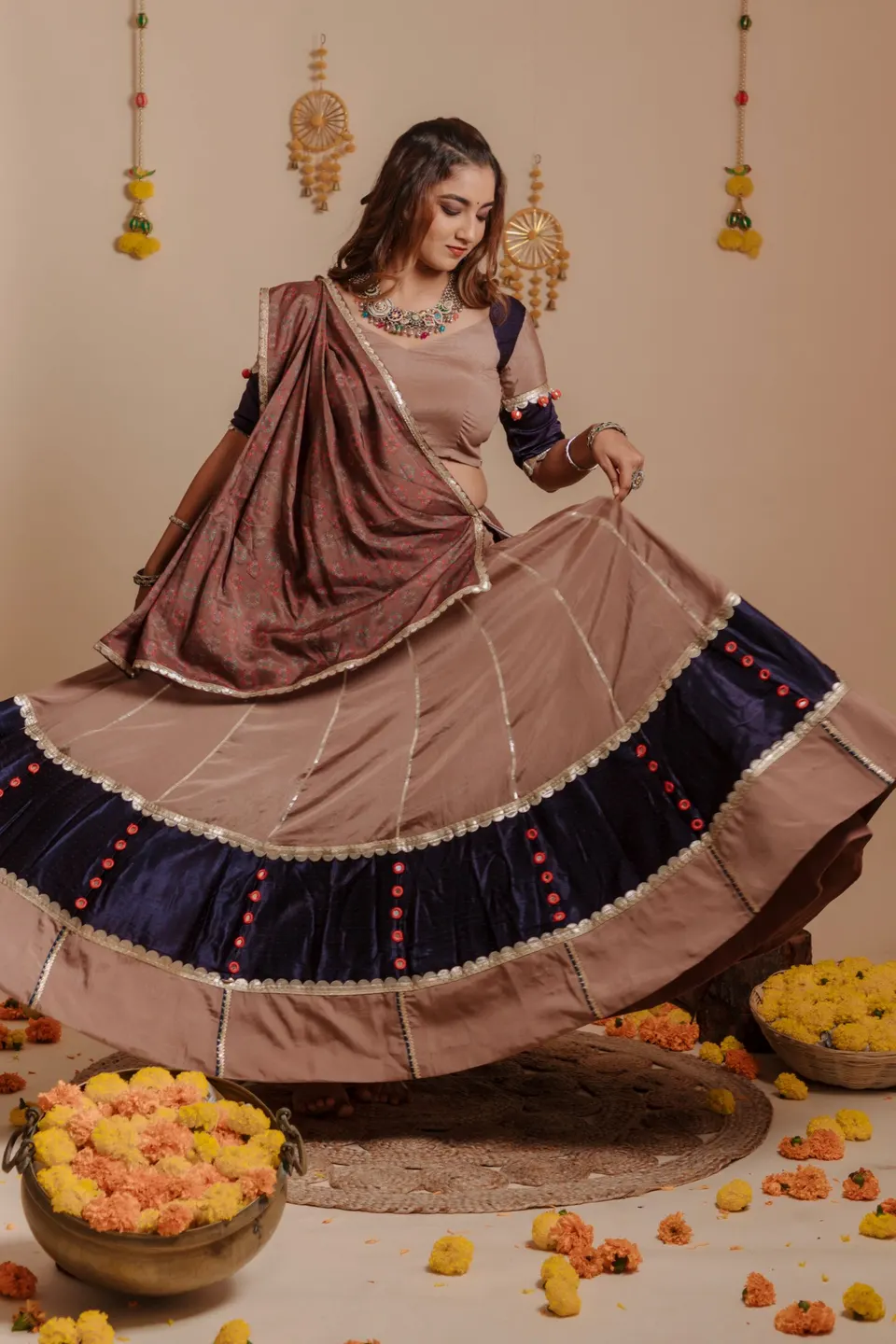
Questions from Gandhidham
Do you make for brides in Gandhidham and Bhuj?
Yes. Kutch is about 450 km from the studio, so orders run the way overseas ones do: the design is settled on WhatsApp, measurements are taken together on a video call of about twenty minutes, progress photographs come to the same thread, and the finished piece is couriered.
Can a bridal lehenga be made without any visit?
Yes, and it is ordinary here — a good share of the studio’s work goes to families in the US, UK, Canada and Australia who are never measured in person. The measurements are taken with you on a call rather than posted as a form, which is what makes them come out right.
Do you work in bandhani and mirror work?
Yes. Both are among the five crafts worked by hand in this studio — bandhani, the tie-resist dye of Kutch and Saurashtra, and shisha or mirror work, each mirror caught in hand stitches. The others are zardozi, gota patti and aari.
Is there a studio in Kutch?
No. There is one studio and one designer, on Old Padra Road in Vadodara. Kutch brides are fitted on a video call and the finished pieces are couriered.
Can you rebuild my mother’s panetar or gharchola?
Yes, and it is some of the work the studio likes best — the original hand embroidery kept at the heart of a garment rebuilt to your body and taste. Send photographs first and we will tell you honestly what can be kept, what cannot, and what it would become.
How do I plan the timing from this far away?
Tell us the date you need the piece in hand rather than the wedding date. A bridal order is four weeks at most start to finish, and the schedule and the courier are planned backwards from the day you want it with you.
Also for
This page speaks for Bhuj, Anjar, Mundra and Adipur too — the journey and the process are the same. Elsewhere in the state:
Tell us the occasion and the date
From Gandhidham that is a message, not a journey. We will tell you plainly what can be made properly in the time, and whether you need to travel at all.