Designer boys’ kurtas · Rakshabandhan — Navratri chaniya cholis · now in the studio — WhatsApp for the collection
The making

Made by hand, start to finish.

Discussion, cloth, design, hand embroidery, trials and delivery — six steps, four weeks at most, for the best day of your life.

4 weeksat most
6steps
200–600hours by hand
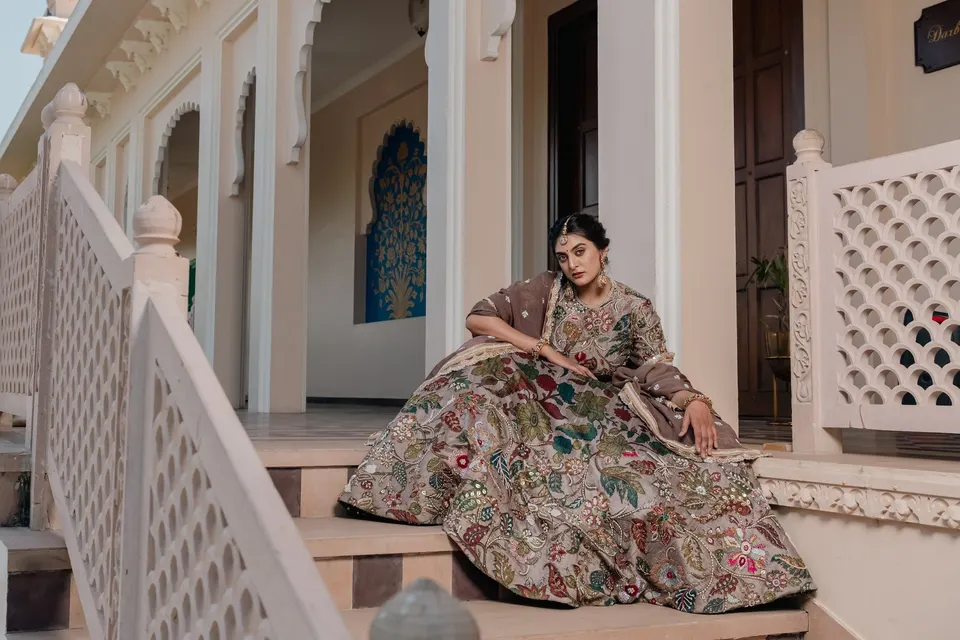
A finished hand-embroidered piece from the Baag A Bahar collection

Discussion, planning and the sketch

It begins with a conversation — the occasion, your date, your body and what you have in mind. The choices are planned, and the thinking is put on paper as a sketch.

A piece you will dance in for four hours and a piece you will stand still in for photographs need to be built differently, even if they look the same in a drawing.

The designer
A bridal lehenga from the Fiori collection, photographed in Jodhpur

Cloth selection

The cloth is chosen against the sketch, in your hand. Colour is settled here, before a single stitch.

Colour is not only about looks. A pale colour shows every small unevenness in hand work, so it needs simpler, cleaner embroidery. A deep red carries heavy gold work better than any other colour. Change the colour late and the embroidery has to be chosen again.

You and the designer
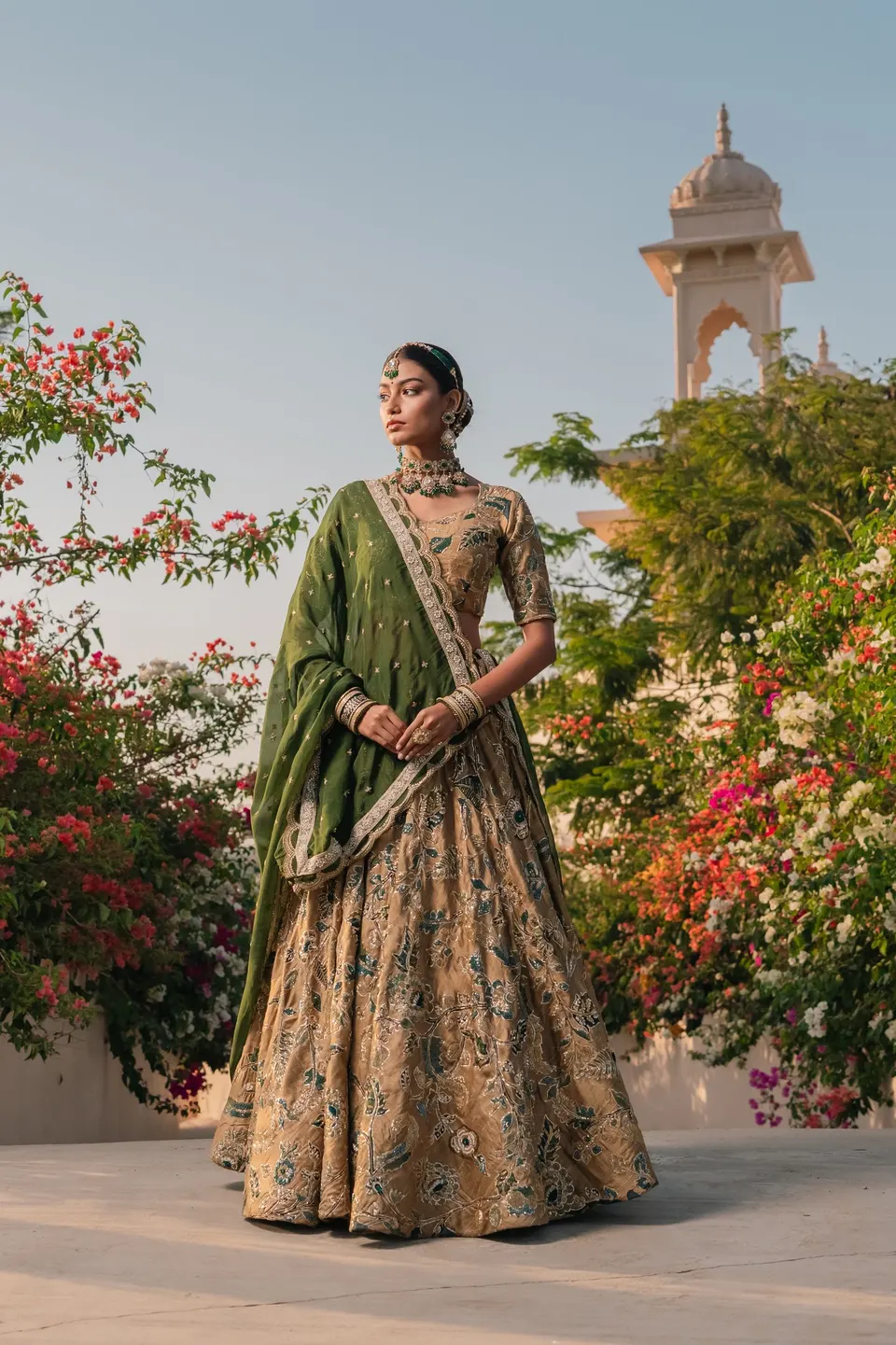
A finished piece from Baag A Bahar, the studio's bridal collection

Design selection

The embroidery is decided: how much of it, where it sits, and in which technique.

It is a decision rather than a fixture — the weight of a lehenga, and how it moves, follows from it.

You and the designer
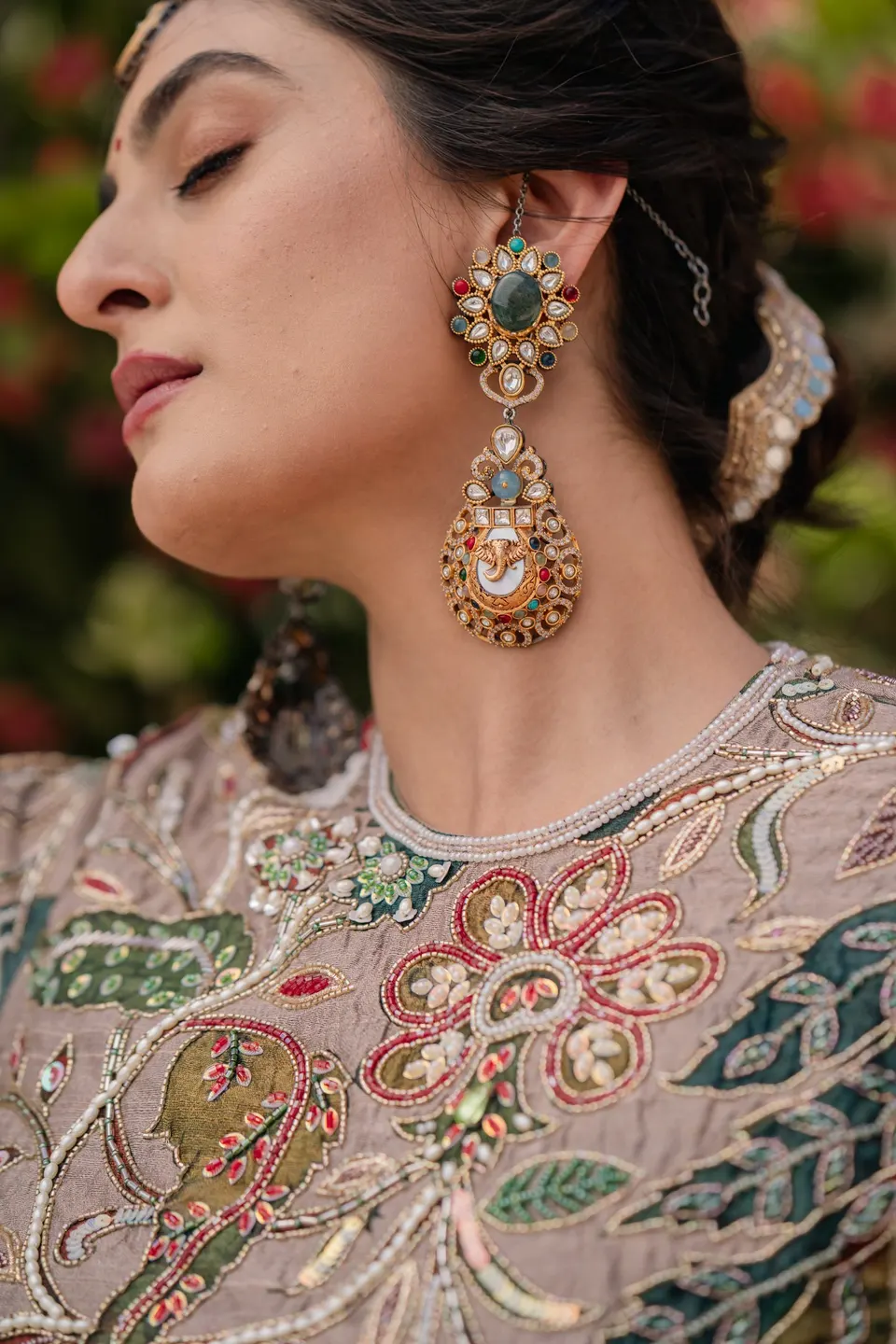
Hand embroidery on a finished Baag A Bahar piece, photographed for the collection

Khatli work, hand embroidery

Khatli work, also called khat work, is the traditional word for hand embroidery. The cloth is pulled drum-tight across the adda frame — the long wooden frame our karigars sit at — and the work grows stitch by stitch, with photographs sent to you as it does.

Zardozi is gold or silver thread laid over padding and stitched down; aari uses a hooked needle to draw a fine chain; gota patti is ribbon cut and folded into petals. None of it can be rushed without showing.

The karigar table
A Baag A Bahar piece photographed on the collection shoot

The trials

The piece on you, with the embroidery already on it — pinned, corrected, and made yours.

A lehenga gets much heavier as the hand work goes on, and weight changes how it sits and how the skirt falls when you turn — so it is fitted with the work on it. For brides outside Vadodara the trials become video calls and photographs.

The studio
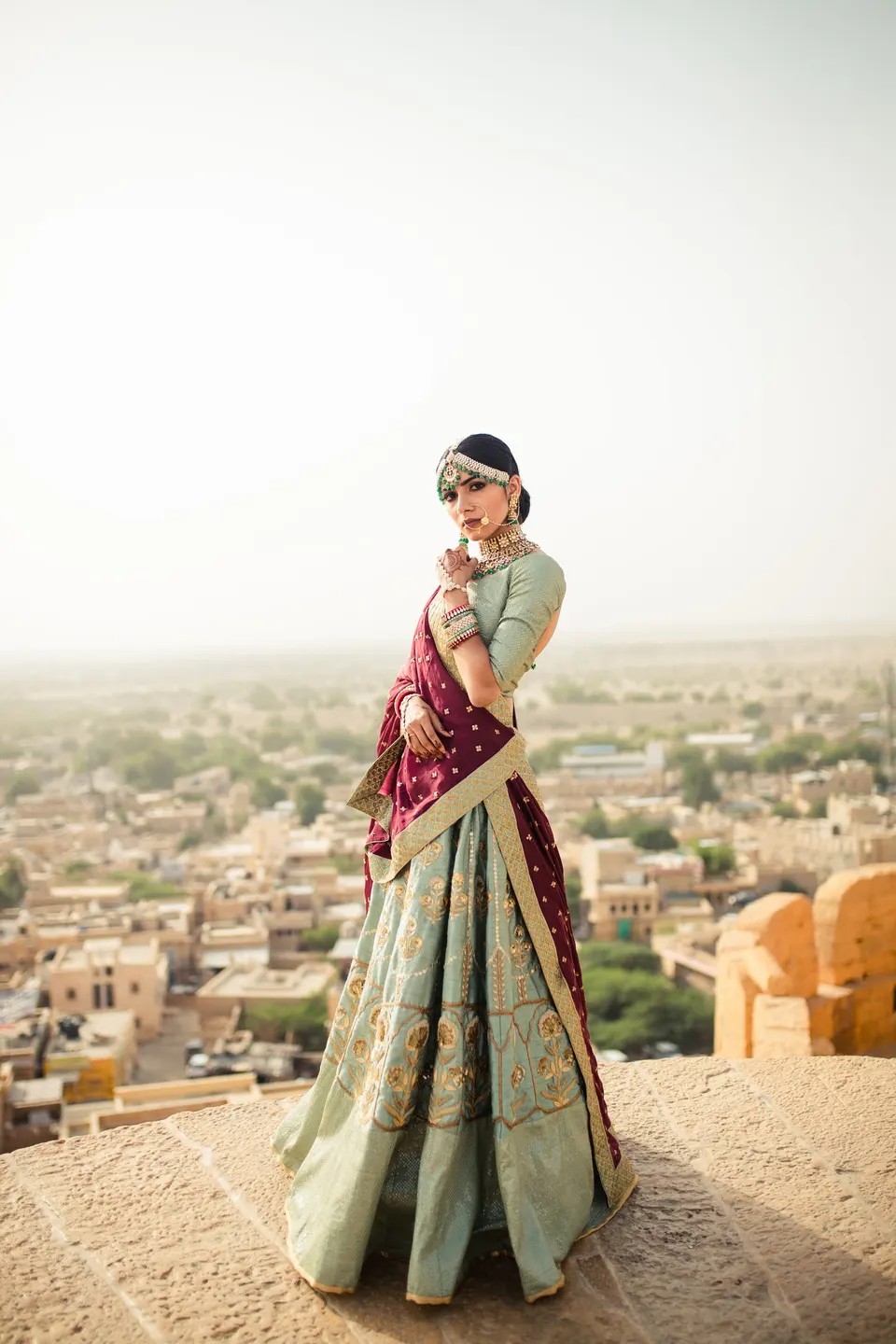
A bride from The Mughal Garden collection, photographed on the Jaisalmer fort

Final delivery

Finished, steamed and boxed to travel, and in your hands for the best day of your life.

Lining, fall, hooks, the last row of stitches — the quiet part, which decides whether the piece is comfortable to wear. A lot of what we make now goes to another city or another country, so the box is made to travel.

The whole studio
Nothing is made in advance

We keep no stock. Every piece is started only when it is ordered.

There is no rack of ready lehengas in three sizes, waiting for someone they nearly fit. Every piece is cut to her measurements and made once — which is also why a piece photographed three years ago can still be made for you today.

Nothing is sent out

Our karigars work with us, at frames in this studio.

A lot of Indian embroidery is designed in one place and stitched wherever it is cheapest that month, which is why two pieces sold as the same thing can look quite different. Here the work is watched as it grows, and that is most of what the four weeks pay for.

The crafts these hands carry

More of the day-to-day work goes up on Instagram. If you are working out when to start, read when your lehenga should begin, or see how ordering works.

Questions about the work

How many hours of hand embroidery go into a bridal lehenga?

Roughly two hundred to six hundred, depending on the piece, and about four hundred of those are zardozi on a heavily worked one. A bridal order takes four weeks at most, from the first discussion to delivery.

How long does a bridal lehenga take?

Four weeks at most, from the first discussion to delivery. The sequence is a discussion with planning and a sketch, the cloth, the design, the Khatli hand embroidery, the trials, and the final delivery.

Is the embroidery done in the studio or sent to a workshop?

In the studio, at adda frames in the room on Old Padra Road, by karigars who work with it directly. Nothing is subcontracted to whichever workshop was cheapest that month, which is the ordinary practice and the reason so much hand work arrives with nobody able to say who did it.

What is an adda frame?

The low wooden frame the cloth is pulled drum-tight across while it is worked. Zardozi and aari are both done on it — the tension is what lets a needle lay a stitch precisely enough to draw with. It is the piece of equipment that separates hand work from machine work more than any other.

Can I see the piece while it is being made?

Yes. Progress photographs come to the same WhatsApp thread as the piece grows, so you can watch the embroidery fill in without standing in the room. Brides in Vadodara come in for the trials; brides elsewhere see it in photographs and on a video call.
WhatsApp

We never share your details. Fields marked * are needed so we can reply.