Gujarati Wedding Rituals, in Order
From the first chandlo to the ring in a bowl of milk: what happens at each ritual of a Gujarati wedding, the order they usually come in, and what the bride, the groom and the family wear to each.
A Gujarati wedding usually runs in this order: chandlo matli and gol dhana for the engagement; mandap muhurat and Ganesh sthapana; grah shanti; pithi; mameru; sanji, mehndi and garba; then the wedding day — the jaan, ponkhanu, madhuparka, antarpat, kanyadaan, hast melap, the mangal fera, kansar and vidaai — and griha pravesh with aeki beki. Families and communities vary both the order and the names.
No two Gujarati families run a wedding identically. A Patel wedding in Anand, a Jain wedding in Surat and a Vaishnav wedding in Vadodara share most of their rituals and differ on many details, and a family in New Jersey will fold a week of them into a weekend. What follows is the common shape, in the order most families keep, with a plain note on what each ritual asks of the clothes.
It is also, read the other way, a wardrobe. Almost every ritual below is photographed, almost every one has the bride, the groom and both families in it, and nearly all of them want something different from a garment: a puja you sit through on the floor, a turmeric morning, a night of garba, a ceremony that runs for hours under lights.
1. Chandlo matli: the families agree
Traditionally the first ritual. The bride’s father and a few close relatives visit the groom’s home, put a chandlo — a red tilak — on his forehead, and give a matli, a steel pot filled with sweets. It says the match is agreed. The gathering is small and domestic: kurta sets for the men, sarees or light suits for the women, nothing heavy. The bride is often not there at all.
2. Gol dhana: the engagement
Gol is jaggery and dhana is coriander seed, and the two are mixed and handed round as the engagement is announced. Rings are exchanged, and the groom’s family usually brings gifts for the bride. This is the bride’s first formal outfit of the wedding, worn months before it, and it should sit a clear step below anything she wears at the wedding itself. Gol dhana and chandlo matli outfits has the detail.
3. Mandap muhurat and Ganesh sthapana
A few days before the wedding, a puja at each home blesses the ground where the mandap — the mandvo — will stand, and Ganesh is installed so that the wedding begins without obstacles. It is a morning of sitting cross-legged through a puja in daylight, usually the first time the whole family is photographed together. Mandap muhurat outfits covers it.
4. Grah shanti
A puja to the nine planets, asking for a peaceful married life, held at each home with the parents seated beside the bride or the groom. It is long, and it is on the floor. Traditional clothes in auspicious colours, nothing black, and a cut that lets you sit for two hours without fidgeting. Grah shanti and mameru outfits sets it out.
5. Pithi
The Gujarati turmeric ceremony. Pithi — a paste of turmeric, often with chickpea flour, sandalwood and rose water — is applied to the bride and to the groom at their own homes, usually a day or two before the wedding and often on the same day as the grah shanti. It stains, so the clothes are light and cheerful and not precious. Pithi ceremony outfits has the full guide.
6. Mameru
The bride’s mama, her mother’s brother, arrives with his family and his gifts: clothes, jewellery and sweets, and by custom the panetar the bride will wear to the ceremony. It is one of the most affectionate rituals of the wedding and one of the most photographed. The panetar and gharchola page explains why the panetar comes from the mama.
7. Sanji, mehndi and garba
Sanji is an evening of Gujarati wedding songs, sung by the women of the family. Mehndi is applied, usually the day before. And most Gujarati weddings have a garba or dandiya raas night that the whole community comes to — in the diaspora often the biggest night of the wedding. Each needs its own outfit: mehendi outfits for a bride who sits for hours with her hands out, and a chaniya choli built to dance for the garba.
8. The jaan and ponkhanu
The wedding day begins with the jaan, the groom’s procession to the bride’s home or the venue. At the door the bride’s mother welcomes him with ponkhanu, an aarti during which she playfully tries to catch his nose — a reminder, families say, that he has come to ask for something. The groom is in his wedding sherwani, usually with a safa; for the groom covers what we make for him.
9. Madhuparka, antarpat and kanyadaan
At the mandap the groom’s feet are washed and he is offered madhuparka, a drink of milk and honey. The bride is brought in, traditionally by her mama, wearing the panetar, and a cloth — the antarpat — is held between the two until the auspicious moment, when it is lowered and they see each other. Her parents then give her hand in kanyadaan.
10. Hast melap, mangal fera and kansar
Hast melap joins their hands, and the ends of their garments are tied. Gujarati weddings traditionally have four pheras around the fire, the mangal fera, standing for dharma, artha, kama and moksha, followed in many families by saptapadi, the seven steps. The couple then feed each other kansar, a sweet of wheat, ghee and sugar. The ceremony runs for hours under lights, which is why the fit of the bridal garment matters more here than anywhere else.
11. Vidaai, griha pravesh and aeki beki
After the ceremony the bride, now in the gharchola, leaves her parents’ home. At the groom’s home she is welcomed in griha pravesh, and the couple play aeki beki: a ring is dropped into a bowl of water clouded with milk and kumkum, and whoever finds it more often is said, laughingly, to rule the house. The gharchola comes out again at the first festivals of married life.
The wardrobe, counted
Laid out like this, a Gujarati bride wears six to eight outfits across the wedding and the groom four to six, and the families dress for most of the same rituals. Ordering them together means the colours are decided against each other, and the puja outfits, the pithi piece and the garba chaniya choli are thought about as properly as the ceremony ones. Families abroad, where all of this happens in one weekend, will find a Gujarati wedding abroad, day by day useful.
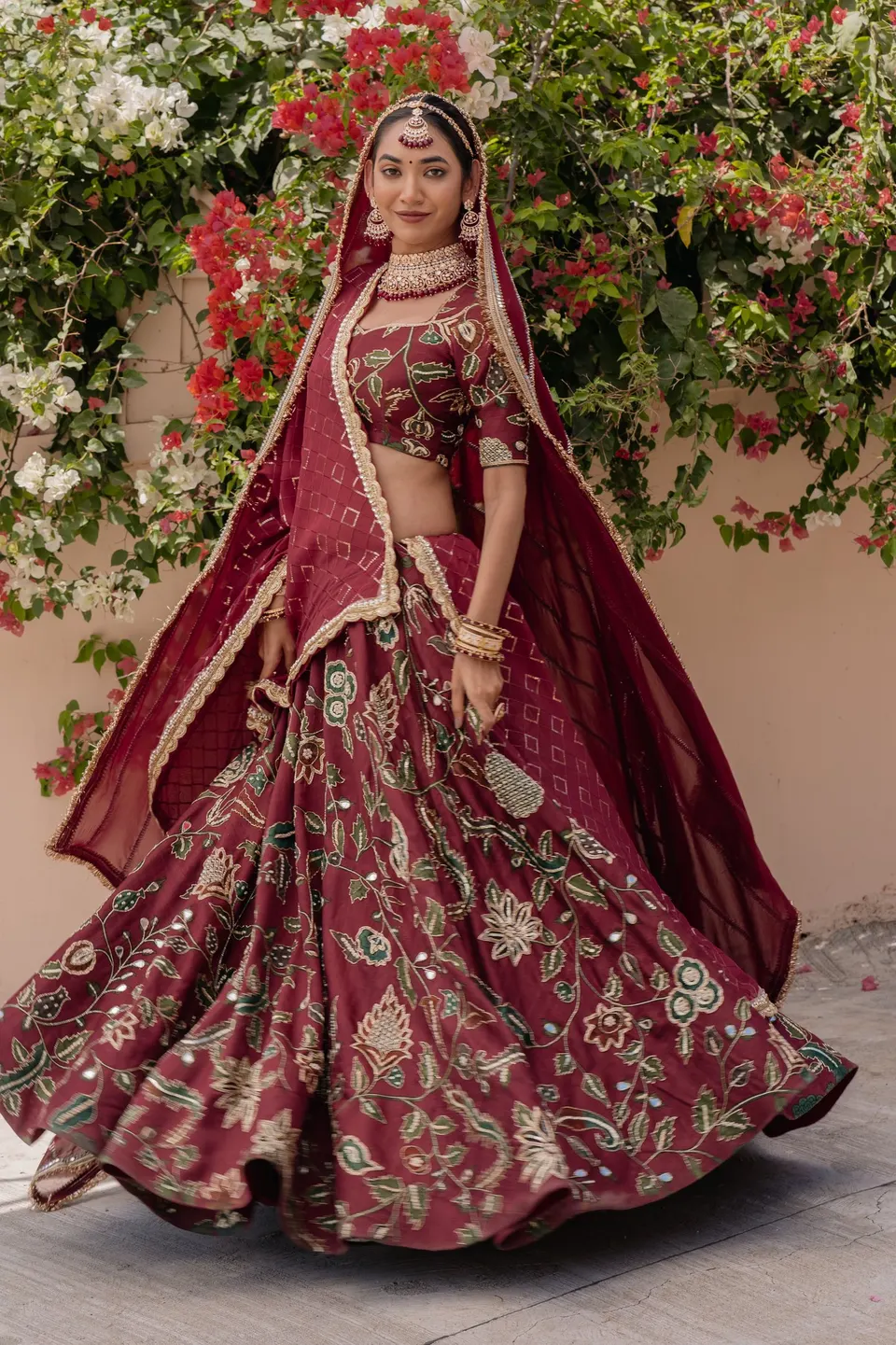
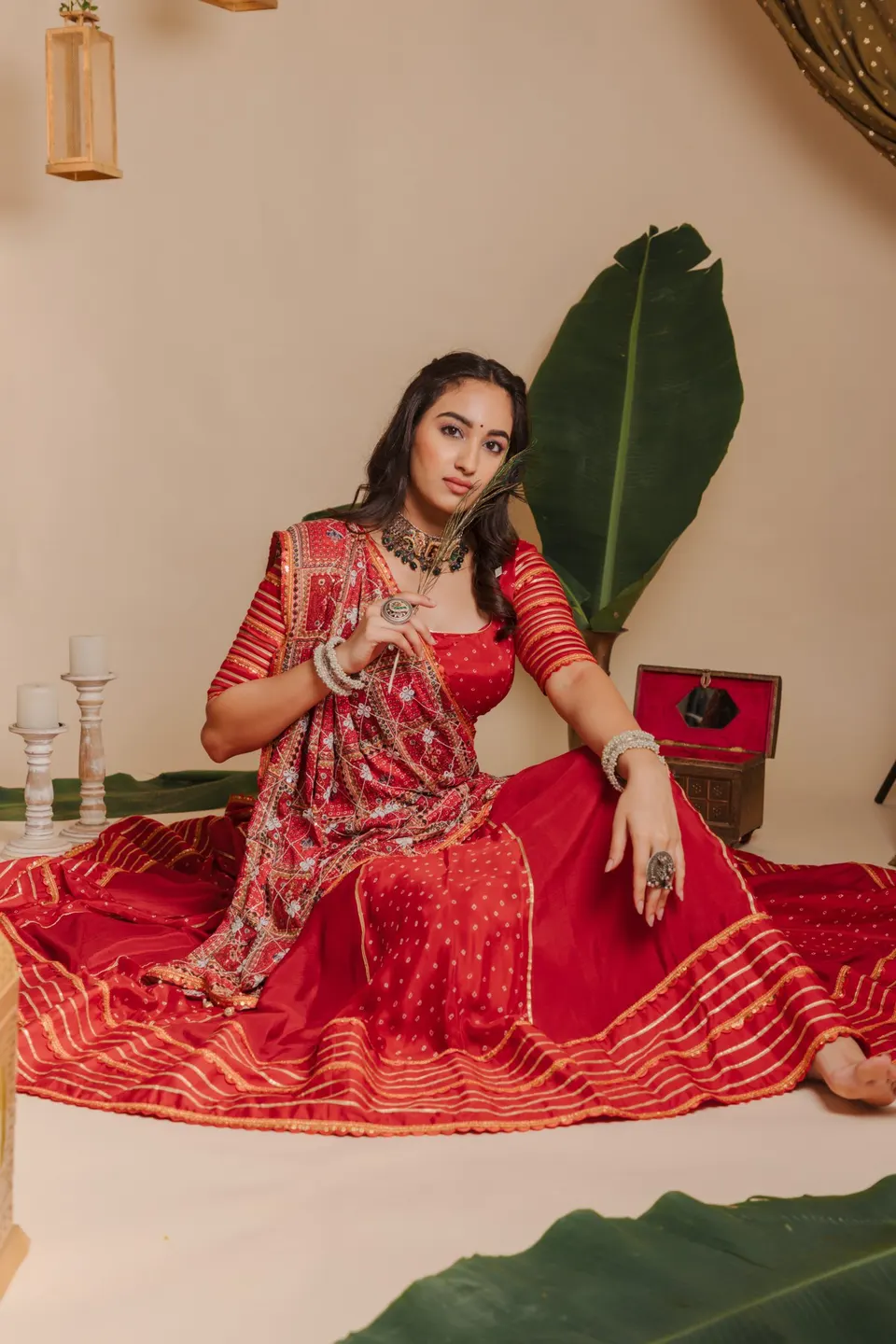
From the collections Bridal, festive and bandhani pieces from the collections, made by hand on silk.
Every collection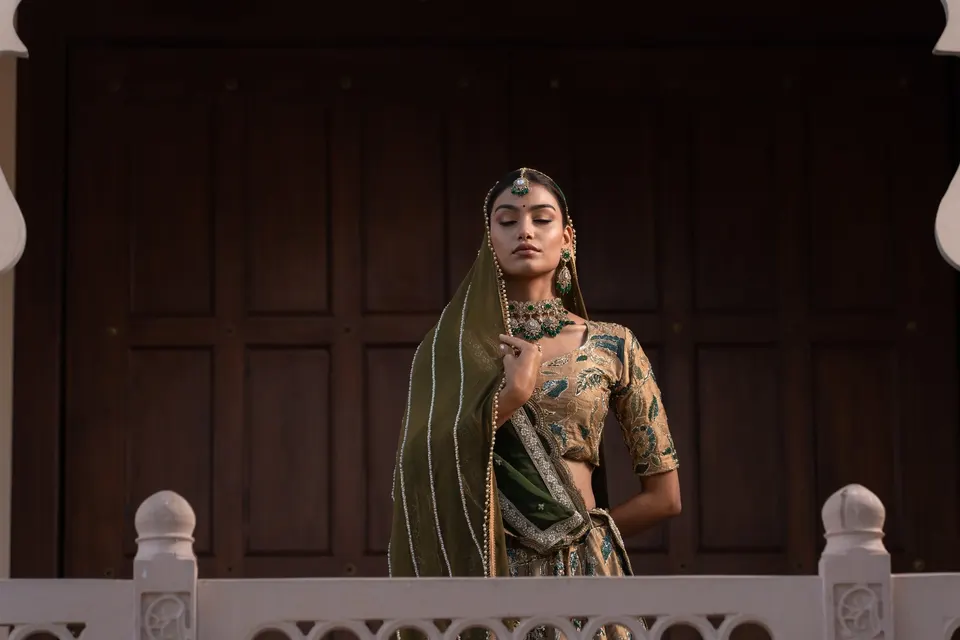
Questions we are asked
What is the order of Gujarati wedding rituals?
Usually chandlo matli and gol dhana (the engagement), then mandap muhurat and Ganesh sthapana, grah shanti, pithi, mameru, sanji, mehndi and garba, and on the wedding day the jaan, ponkhanu, madhuparka, antarpat, kanyadaan, hast melap, the mangal fera, kansar and vidaai, followed by griha pravesh and aeki beki. Families and communities vary the order.
How many pheras are there in a Gujarati wedding?
Traditionally four, called the mangal fera, standing for dharma, artha, kama and moksha. Many families follow them with saptapadi, seven steps taken together.
What is mameru in a Gujarati wedding?
The ritual in which the bride’s mama, her mother’s brother, and his family bring gifts — clothes, jewellery and sweets, and by custom the panetar she will wear to the ceremony.
What is ponkhanu?
The welcome the bride’s mother gives the groom at the door on the wedding day: an aarti during which she playfully tries to catch his nose, a reminder that he has come to ask for something.
How many outfits does a Gujarati bride need?
Usually six to eight across the engagement, the pujas, pithi, mameru, garba, the ceremony and the reception — a panetar and gharchola or a bridal lehenga for the ceremony, and lighter pieces for the rest.
Can you make outfits for every ritual if we live abroad?
Yes. Each person is measured on a video call of about twenty minutes, everything is made in Vadodara, and the whole wardrobe is couriered together or collected when you fly in for the wedding.
Read next
Tell us the date and who you are dressing
Bring the date, the occasion and how many people. We will tell you plainly what can be made properly in the time — from the studio in Vadodara, or on a video call from wherever you are.