Haldi Outfits
The one garment of the week chosen knowing it may not survive — and dressed properly anyway, for the bride, her sister, the bridesmaids and the men.
A haldi outfit has to survive turmeric, or be chosen knowing it will not. Turmeric is a dye; on silk and heavy embroidery it often stays. So the haldi outfit is cotton, mulmul or a light silk, in yellow or any colour that photographs in daylight, with light hand work — gota patti, thread, a little mirror — and never the expensive piece. We make haldi outfits to measure for the bride and everyone who will be standing near her.
The haldi is the most physical occasion of the week. Turmeric paste is applied by hand, by everyone, and it goes where it goes. Anyone who tells you it comes out entirely has not tried. This is the one garment of the week that should be chosen knowing it may not be worn again, which is exactly why it should not be the one the money went into.
That is not an argument for dressing badly. The haldi produces bright, joyful, daylight photographs, and a made-to-measure outfit in the right cloth looks better in them than a bought one — it simply should not be the one carrying four hundred hours of zardozi.
What the bride wears
Cotton, mulmul, or a light silk blend — cloth that takes the paste and washes. A lehenga, sharara or a lighter set she can move in, with hand work kept light: gota patti and thread embroidery photograph beautifully at a haldi and cost far less to lose than metal-thread work. Florals, small mirrors and a tasselled dupatta suit the day.
Sleeves and neckline matter for a practical reason: the turmeric goes on the face, arms and feet, so a blouse that keeps the shoulders and forearms reachable saves the garment. Short sleeves or a sleeveless blouse with a light dupatta is the usual answer.
Does it have to be yellow?
No. Yellow is traditional, and it is practical for the obvious reason, but a haldi in whites, creams, greens, pinks and oranges photographs just as well, and a family that wants a palette rather than a uniform can have one. The bride in yellow with the family in white is a common and very good-looking arrangement. So is the reverse.
What does not work is anything dark or anything heavy. Turmeric on deep colours reads as a stain; on light ones it reads as the haldi.
Her sister, the bridesmaids and the mothers
The same rule, one step lighter. Cotton and light silk, a shared colour or a shared print rather than identical outfits, and hand work that will not be mourned. The sister’s piece is usually made alongside the bride’s so the two sit together in the photographs.
The men
Kurtas in white, cream or yellow that they accept may be stained, in cotton for an afternoon of being handed turmeric. The groom’s haldi kurta is worth making properly — he is in every photograph — and the brothers and fathers can follow the palette. All made in the same studio.
When to order
The haldi is usually the morning of the wedding or the day before, so its outfit is due with everything else. Order it as part of the wedding-week set. A light cotton piece takes far less time at the frame than a bridal lehenga, but the calendar in the wedding season is decided by how many pieces are due on one date, not by how simple each is.
From outside Vadodara, or outside India
Measured on a video call of about twenty minutes, per person, and couriered. A haldi set for a family spread between Ahmedabad, London and New Jersey is an ordinary order here, and a light one to ship.
Haldi outfit ideas
Yellow is expected but not required. Ivory, lemon, pale pink and mint all photograph well against turmeric, and a white or ivory base lets the yellow of the day do the colouring.
Easy ideas: a marigold lehenga in a light fabric with an ivory dupatta; an ivory skirt with a yellow blouse; a pastel kurta set with a flared skirt. Turmeric stains, so choose hand work and fabric you will not mind marking.
For the men, a lemon, white or ivory kurta; for the family, the same colours in different cuts.
From the collections Premium silk from the Navratri collection — light enough for the weight and the cloth a haldi asks for.
Every collection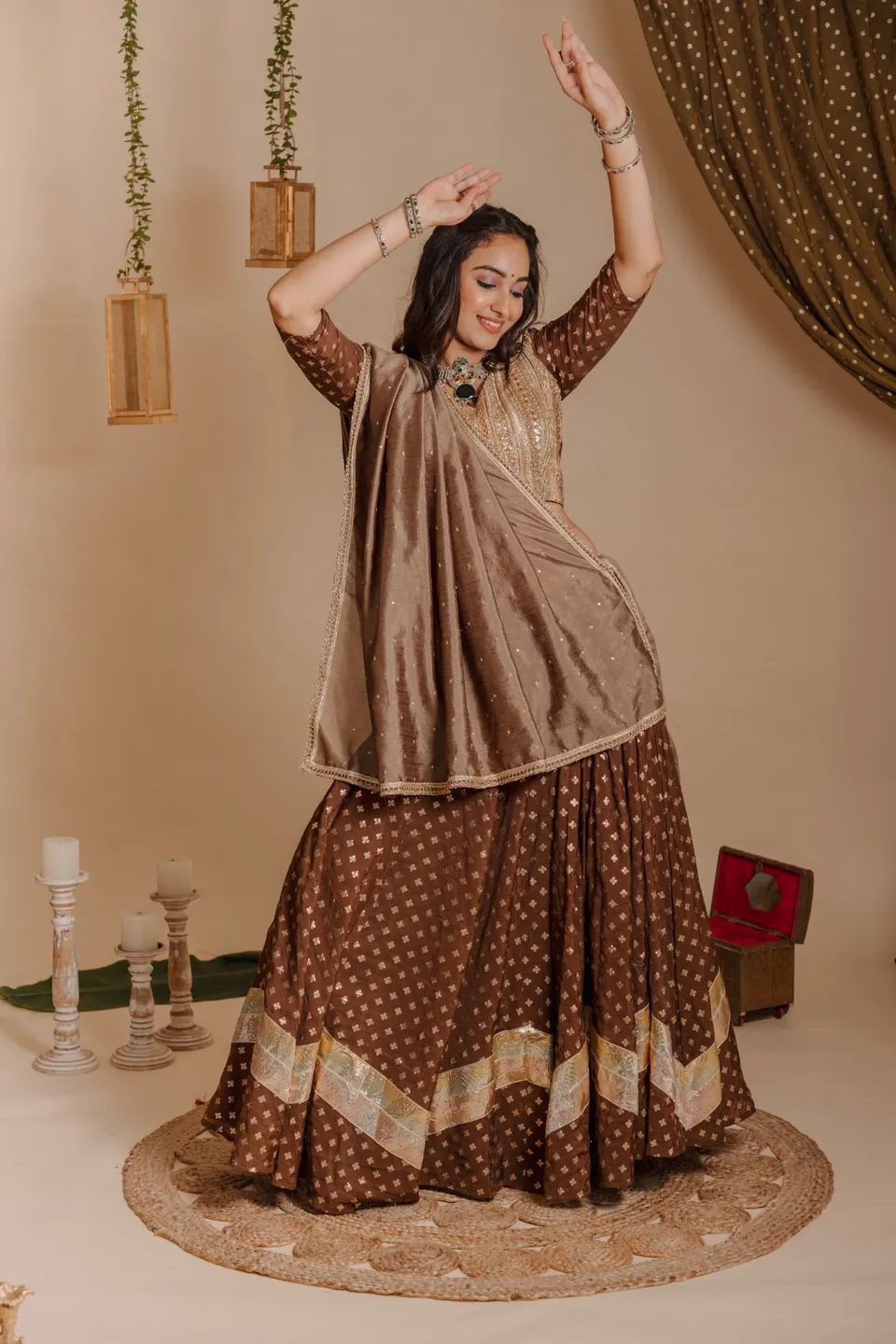
Questions we are asked
What should a bride wear for her haldi ceremony?
Cotton, mulmul or a light silk blend in yellow or another light colour, with light hand work — gota patti, thread embroidery, a few mirrors — and short or no sleeves so the turmeric can go on without going on the garment. Never the expensive piece: turmeric is a dye and may not come out.
Will turmeric come out of a haldi outfit?
Not reliably. On cotton it often washes out; on silk and heavy embroidery it usually stays. Choose the haldi outfit knowing that, keep the hand work light, and spend the budget on the pieces that will be kept.
Does a haldi dress have to be yellow?
No. Yellow is traditional and practical, but whites, creams, greens, pinks and oranges all photograph well at a haldi. Dark and heavy colours do not — turmeric on them reads as a stain rather than as the ceremony.
What should the bride’s sister wear to the haldi?
The same rule as the bride, one step lighter: cotton or light silk, a colour that sits beside the bride’s, light hand work. It is usually made together with the bride’s haldi piece so the two match in the photographs.
What do men wear for a haldi ceremony?
Cotton kurtas in white, cream or yellow that they accept may be stained. The groom’s is worth making properly since he is in every photograph; brothers and fathers follow the palette.
Can you make haldi outfits for a family outside India?
Yes. Each person is measured on a video call of about twenty minutes and the pieces are couriered. Light cotton pieces are among the easiest things on the site to ship.
What are some haldi outfit ideas?
Yellow is traditional, but ivory, lemon, pale pink and mint work too. Try a marigold lehenga with an ivory dupatta, or an ivory skirt with a yellow blouse. Choose light fabric and hand work you will not mind staining.
Read next
Tell us the date and who you are dressing
Bring the date, the occasion and how many people. We will tell you plainly what can be made properly in the time — from the studio in Vadodara, or on a video call from wherever you are.