Reception Outfits
The most photographed and the most formal evening of the week — and the piece most likely to be worn again. Made to measure for the bride and her family.
A reception outfit is the most formal and most photographed garment of the wedding week after the bridal lehenga, and the one most likely to be worn again. It should hold its shape through a long evening of standing and photographs, which is where weight helps — richer silks, zardozi and aari — in a colour away from the wedding red: deep blues, wine, emerald, ivory and gold, blush. We make reception lehengas to measure for the bride, her sister and the family.
The reception is the one evening where nothing else is happening. No ceremony, no ritual, no turmeric — only the couple, the guests, and a very long line of photographs. It is usually the piece families spend on after the wedding lehenga itself, and it is the one that will come out of the cupboard again for a sister’s wedding or an anniversary.
Both of those facts should shape the choice.
What the bride wears
A lehenga in most families, lighter than the bridal one in colour and weight but heavier than a sangeet piece, because here weight helps: heavier hand work holds its line through two hundred photographs, where a light garment starts to look tired by the end of the evening. Silk, silk organza and raw silk take zardozi and aari well and drape the way a reception wants.
The blouse can be more contemporary than the wedding one — this is the outfit where a bride who wants a modern line usually has it — and a single dupatta, draped once and pinned, keeps the silhouette clean for the photographs.
Colour, away from red
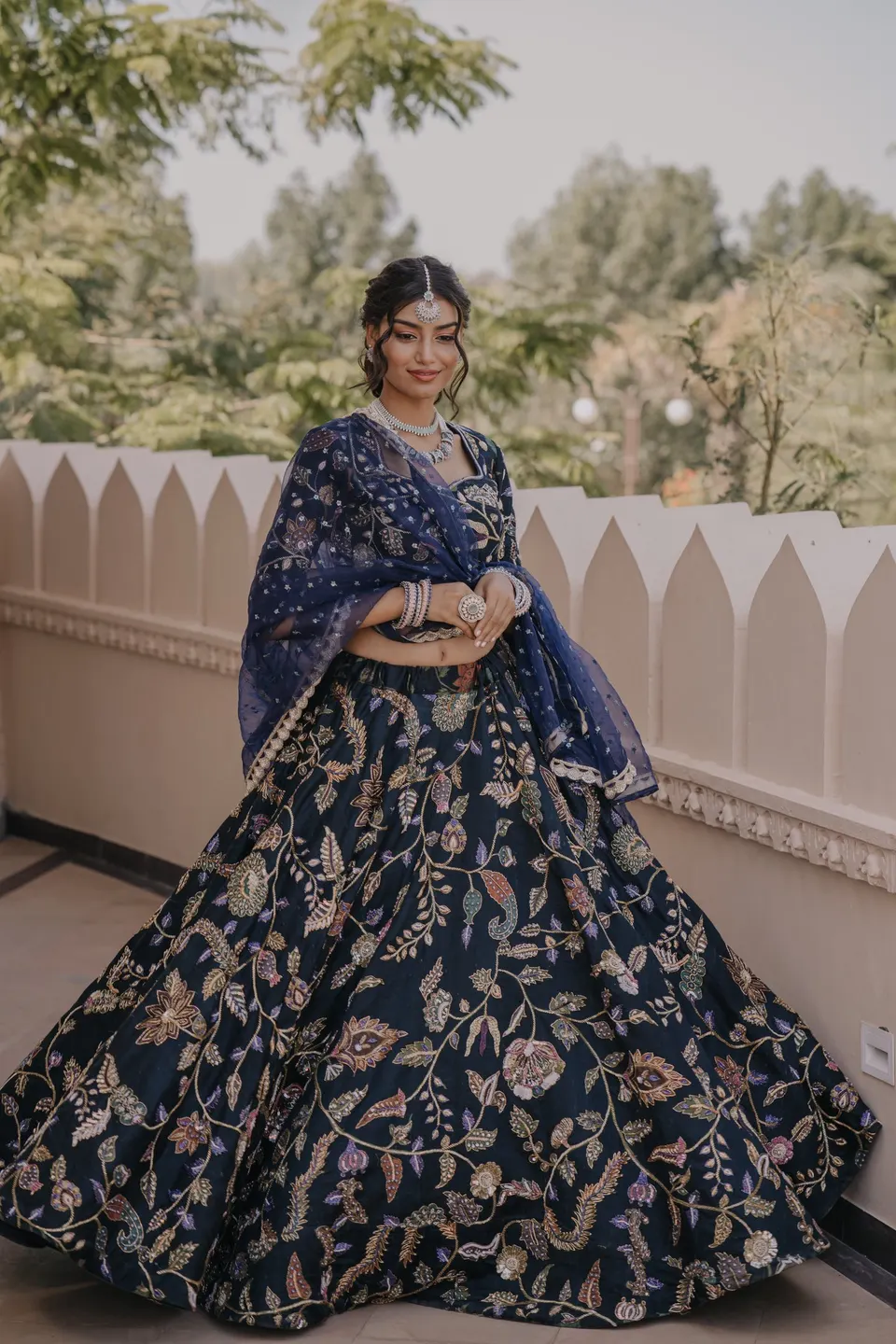
The wedding day usually has the red, or the panetar and gharchola in a Gujarati wedding. The reception is where the other colours live: deep blues and navy, wine and plum, emerald, ivory with gold, blush and old rose, mocha. Evening lighting is warm, so colours with depth photograph better than pale ones; if she wants ivory or blush, the hand work supplies the depth.
The piece she will wear again
A reception lehenga is the most re-wearable garment of the week, and it is worth choosing with that in mind — a blouse that can be worn with a saree later, a skirt that stands on its own, a colour she will still want in five years. Because every piece here is cut to one body and nothing is made twice, it is also the one most worth caring for properly afterwards.
Her sister and the family
The sister’s reception outfit is the second most formal piece she will wear all week and is often made alongside the bride’s, in a colour that sits with the bride’s rather than against it. Mothers want something they will wear again, which usually means a saree or a lehenga with a separate, wearable blouse. Bridesmaids follow a shared colour family.
The men
The groom’s reception outfit is the most formal of his week — a sherwani, a bandhgala or a structured Indo-western piece — and is very often coordinated with the bride’s colour or embroidery. Brothers and fathers in kurta sets or bandhgalas in the family palette. All made in the same studio.
A reception in another country
Many of the families we dress hold the wedding in India and the reception where the couple lives — London, Toronto, New Jersey, Melbourne. The reception outfit then travels with them or is couriered ahead. We make it to measure on a video call like everything else, and the customs page explains what a garment shipped to each country attracts.
When to order
With the bridal lehenga. A reception piece with real hand work is a bridal-weight order, and our calendar runs four weeks at most start to finish. The reception is usually the day after the wedding, so it is due at the same moment as everything else.
Reception lehenga ideas
The reception is the evening the bride is most photographed, and the usual advice is to leave red to the wedding. Ivory with gold, champagne, wine, emerald, deep blue and soft metallic tones all look different from the wedding lehenga while staying in the same family.
Ideas: a structured skirt with a plain, beautifully cut blouse; a lehenga with a long trail; a sari-style drape for something lighter. Choose something she will wear again, because a piece with real hand work is worth more than one evening.
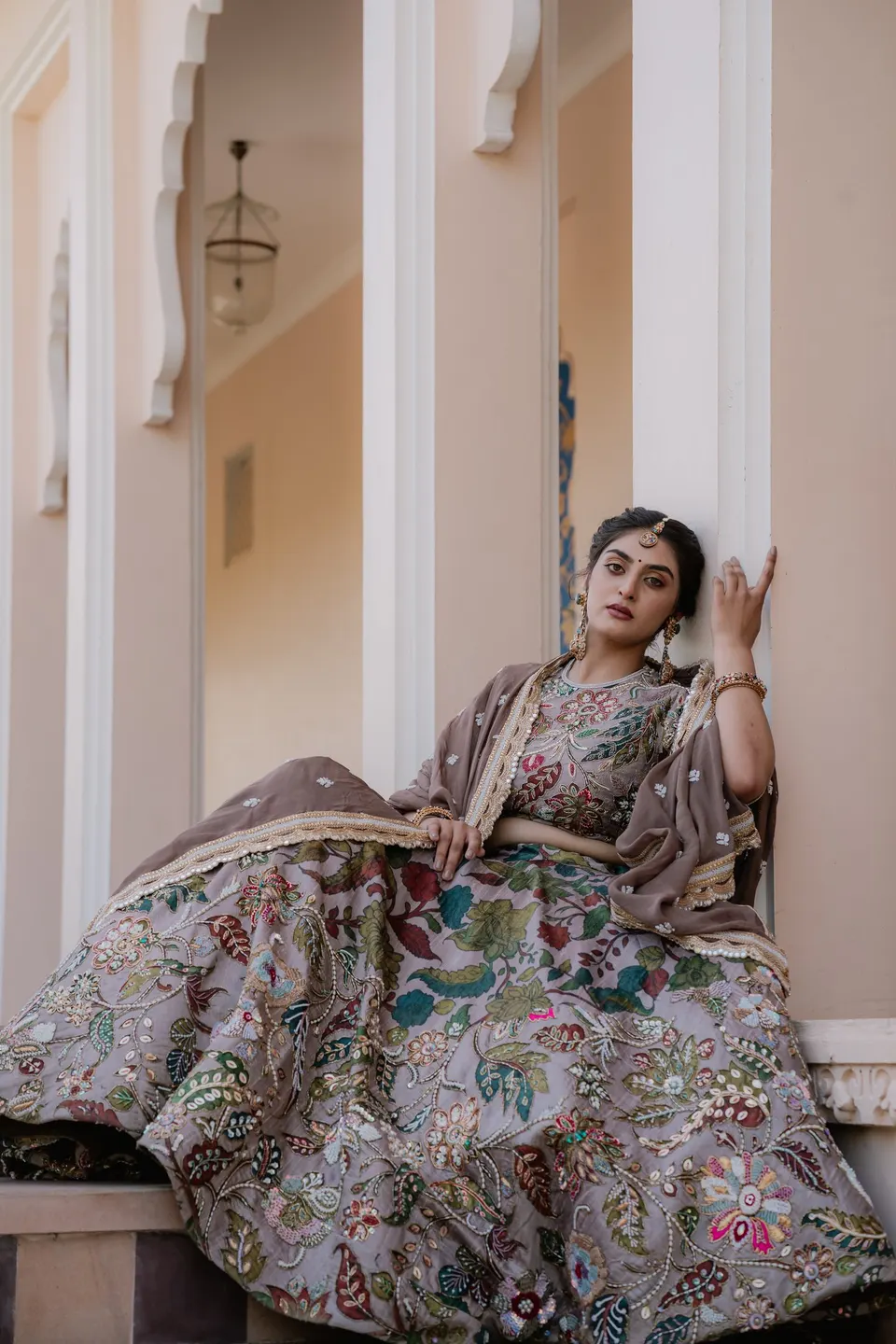
From the collections The three reception looks from Baag A Bahar — hand-embroidered on silk, the heaviest work the studio does.
Every collection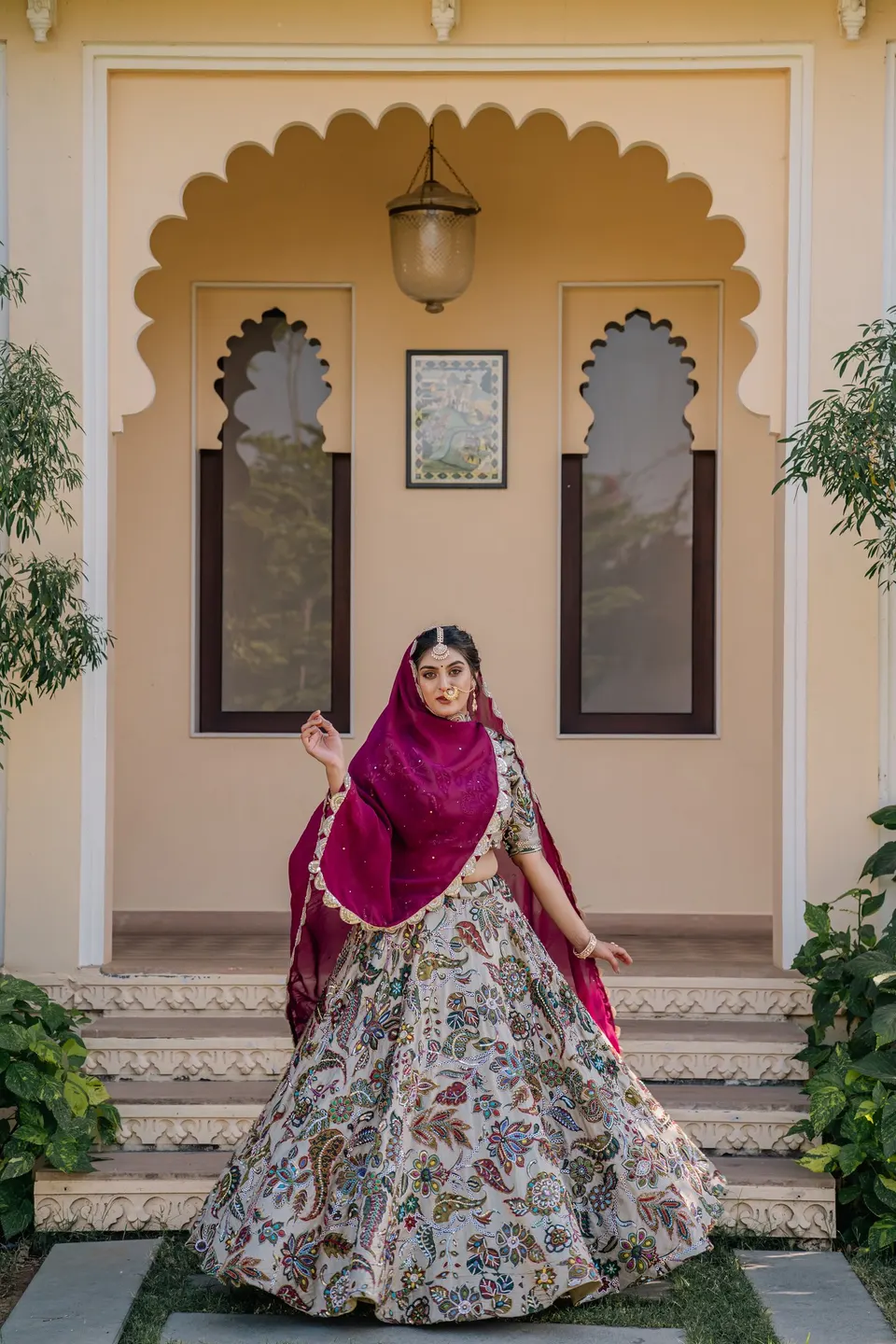
Questions we are asked
What should a bride wear to her wedding reception?
A lehenga lighter than the bridal one in colour but with enough weight of hand work to hold its shape through a long evening of photographs — silk, silk organza or raw silk with zardozi or aari — in a colour away from the wedding red: deep blues, wine, emerald, ivory and gold, blush.
Which colours work best for a reception lehenga?
Colours with depth, because evening lighting is warm: navy and deep blue, wine and plum, emerald, ivory with gold work, blush and old rose, mocha. Pale colours need the hand work to supply the depth.
Should the reception lehenga be lighter than the bridal lehenga?
Lighter in colour, usually, but not much lighter in construction. The reception is standing and photographs for hours, and heavier hand work holds its line where a light garment looks tired by the end. It sits between the bridal lehenga and a sangeet outfit in weight.
What should the bride’s sister wear to the reception?
Her most formal piece of the week, usually made with the bride’s, in a colour that sits beside the bride’s rather than against it. Mothers generally choose a saree or a lehenga with a blouse they can wear again.
We are holding the reception abroad. Can the outfit be made in India?
Yes. It is measured on a video call of about twenty minutes and either travels with you or is couriered ahead. The customs page explains what a garment shipped to the UK, US, Canada or Australia attracts.
How far ahead should a reception lehenga be ordered?
With the bridal lehenga — four weeks at most start to finish, and earlier in the November-to-February season when the studio is booked months ahead.
What are some reception lehenga ideas?
Ivory with gold, champagne, wine, emerald or deep blue, away from the red of the wedding. A structured skirt with a simply cut blouse, or a sari-style drape for something lighter. Choose a piece you will wear again.
Read next
Tell us the date and who you are dressing
Bring the date, the occasion and how many people. We will tell you plainly what can be made properly in the time — from the studio in Vadodara, or on a video call from wherever you are.