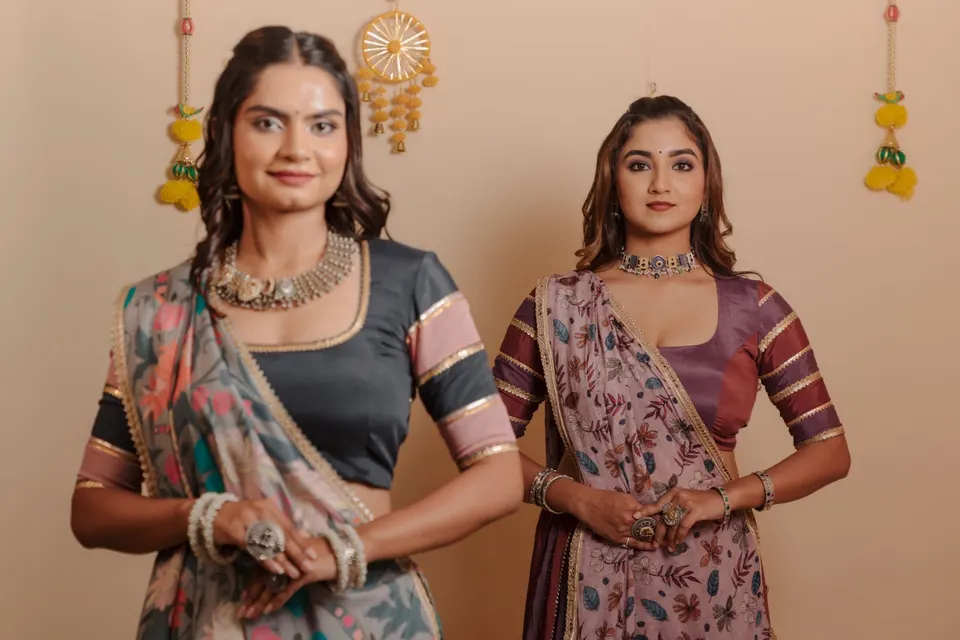
Rang Raas
રંગ રાસ
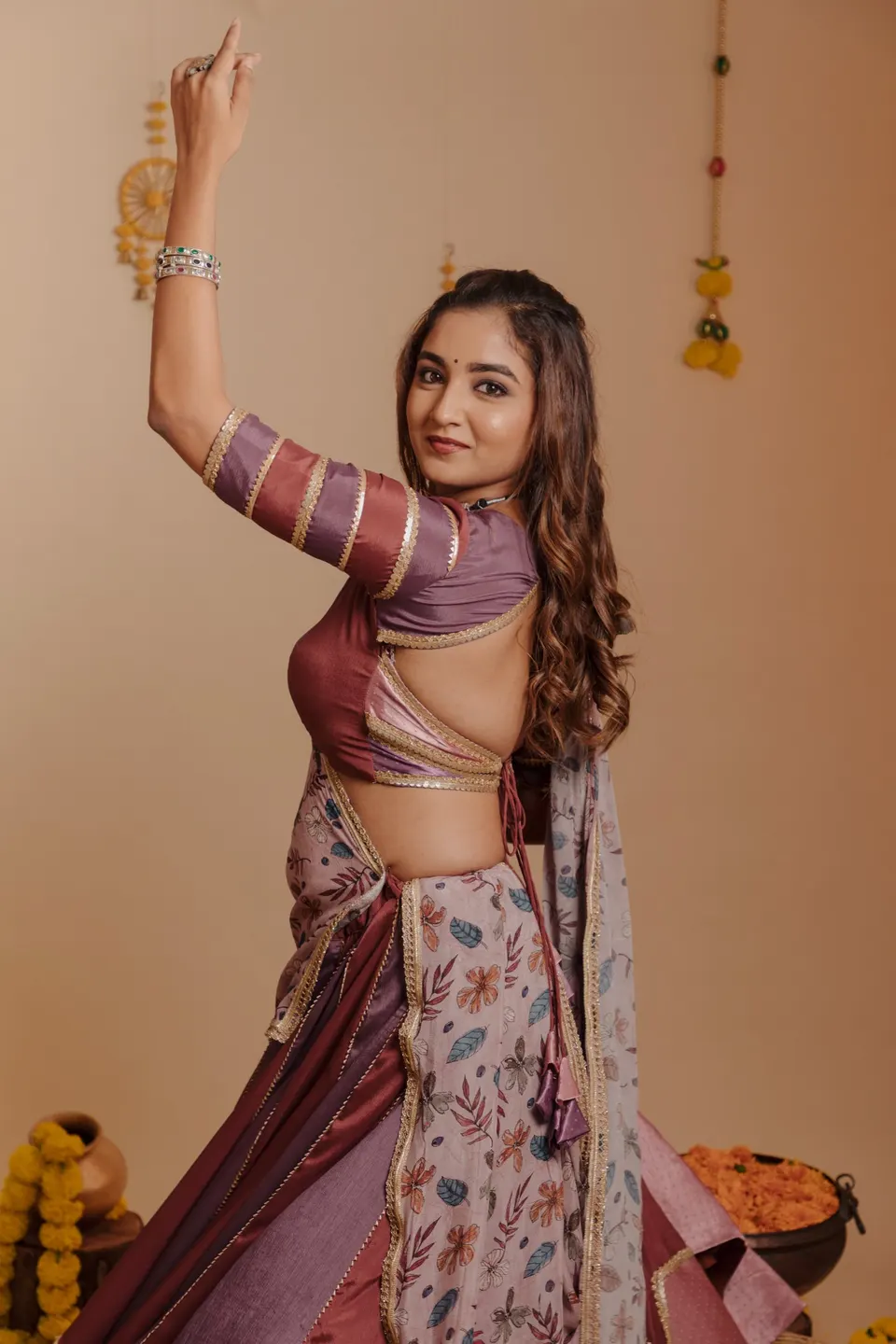
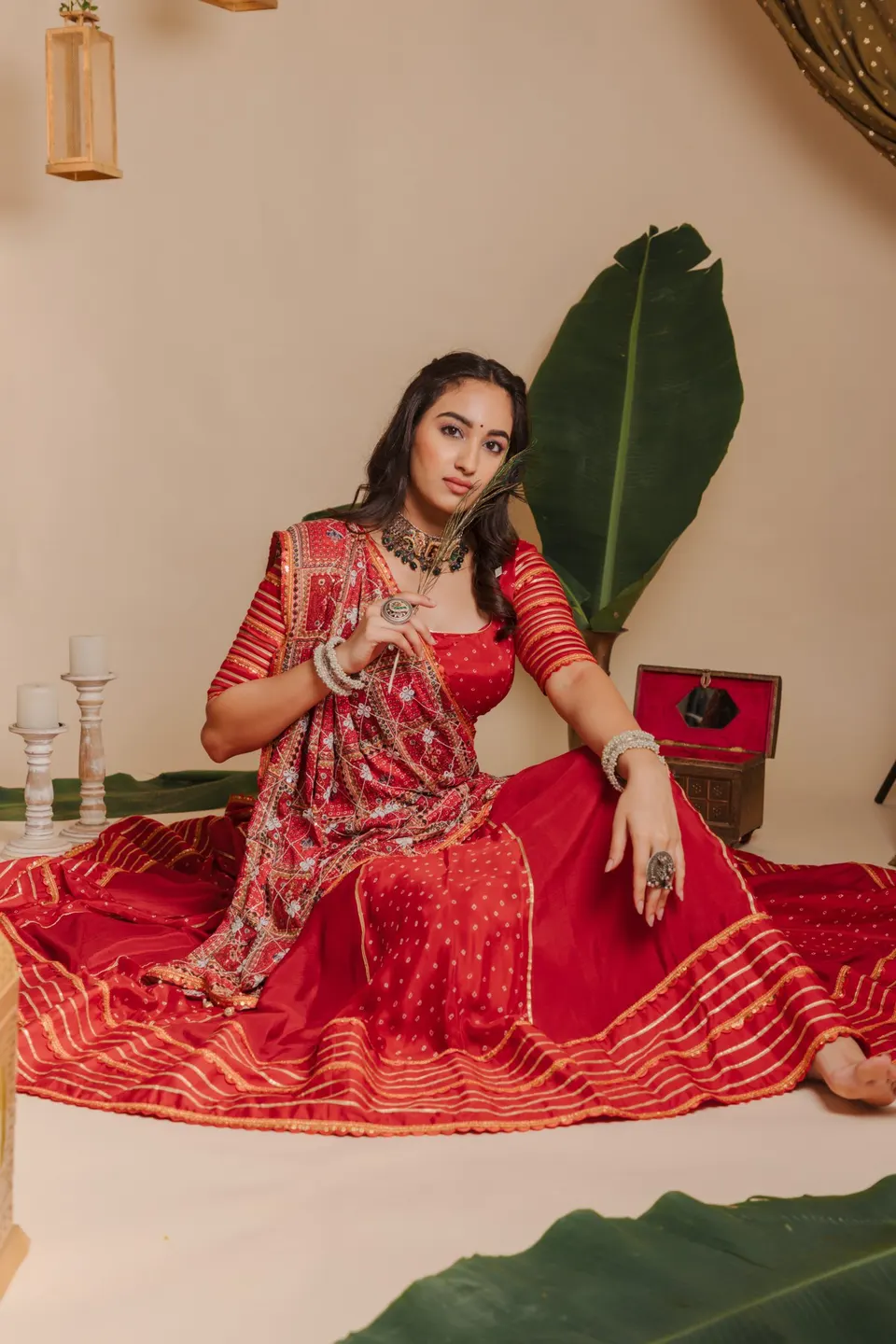
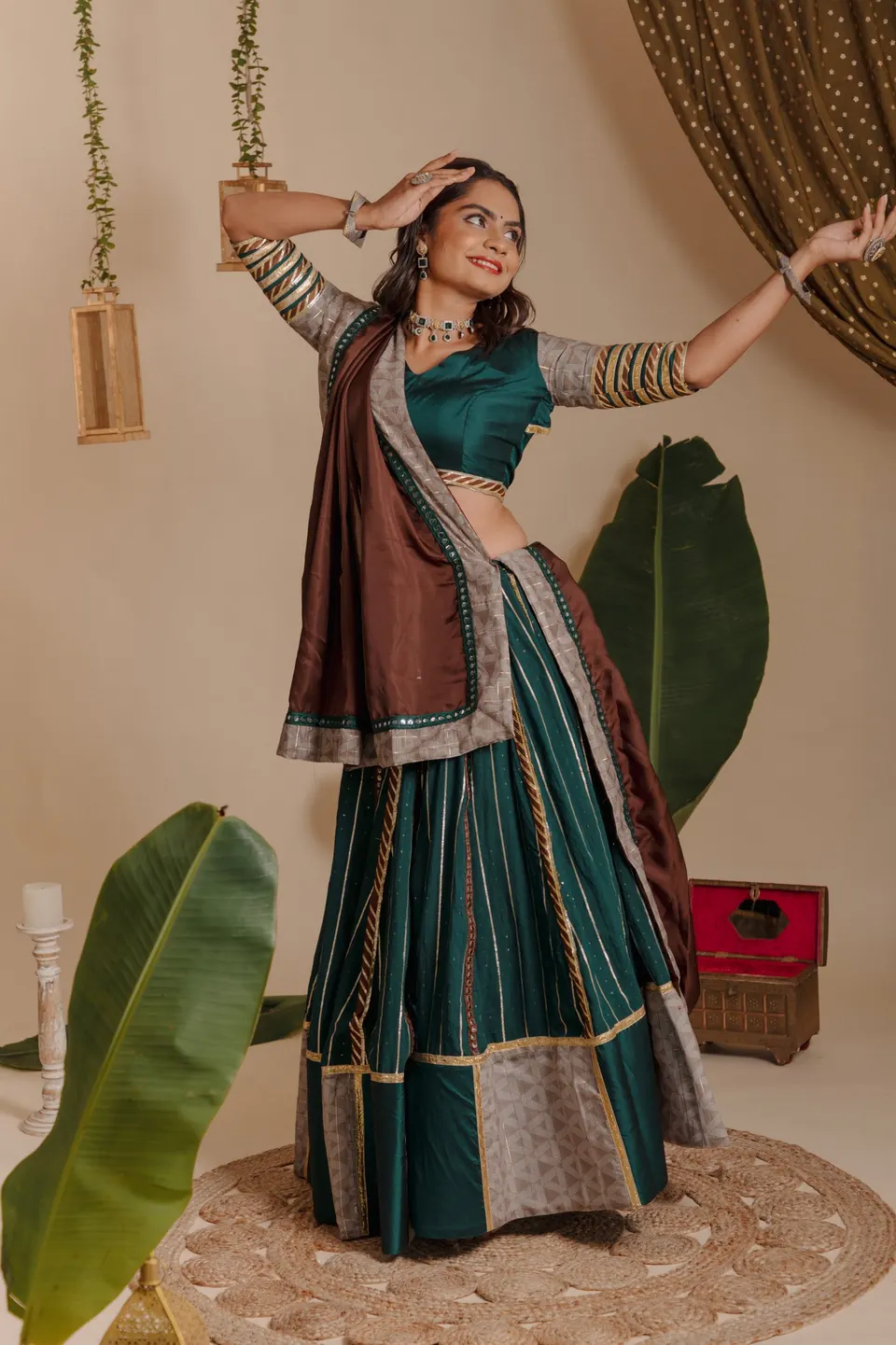
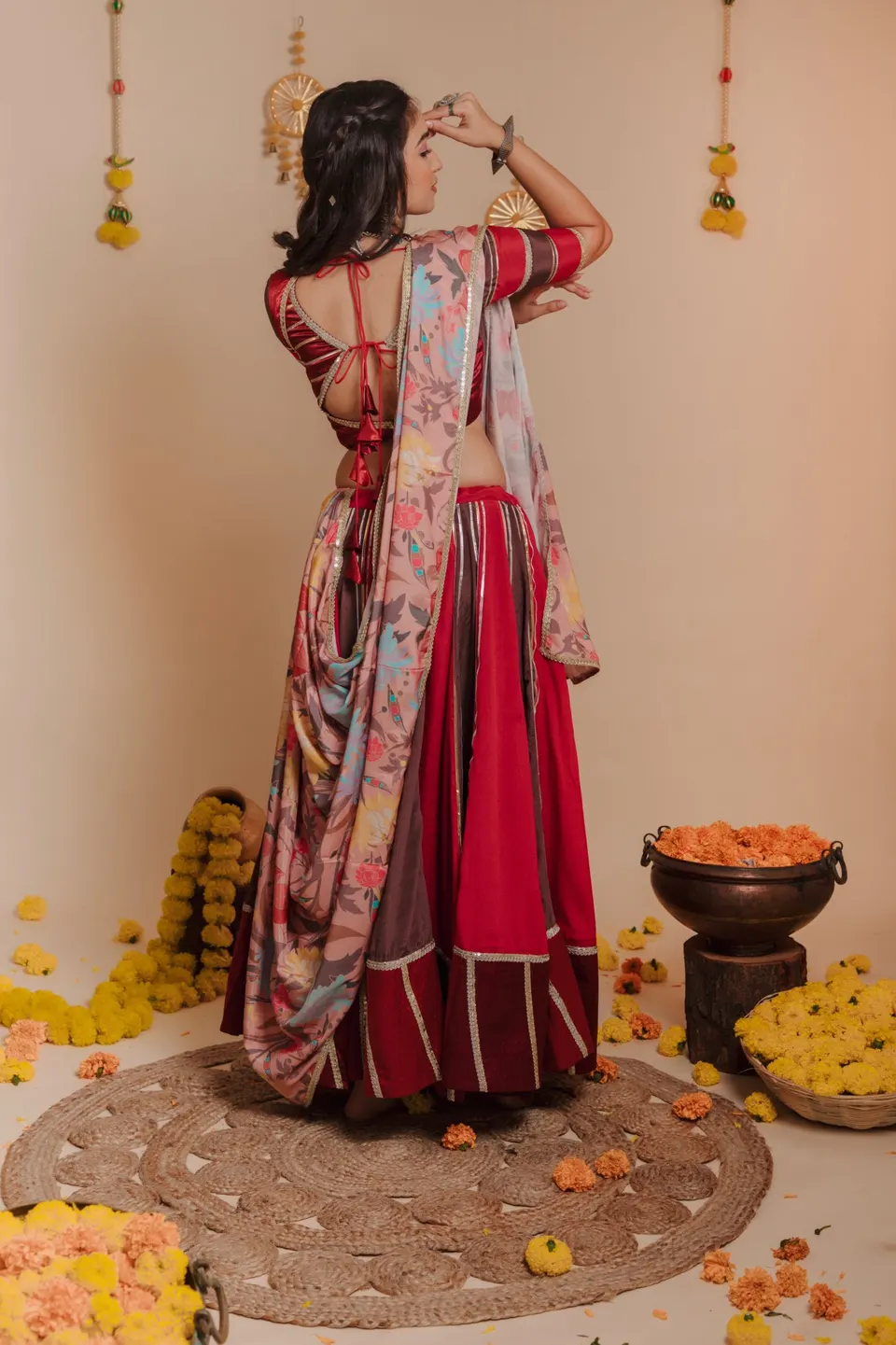
Chaniya cholis built for nine nights of garba — gota laid along the seams so the skirt catches light as it turns, with bandhani and mirror work on the pieces that call for them.
Every look, in order 7
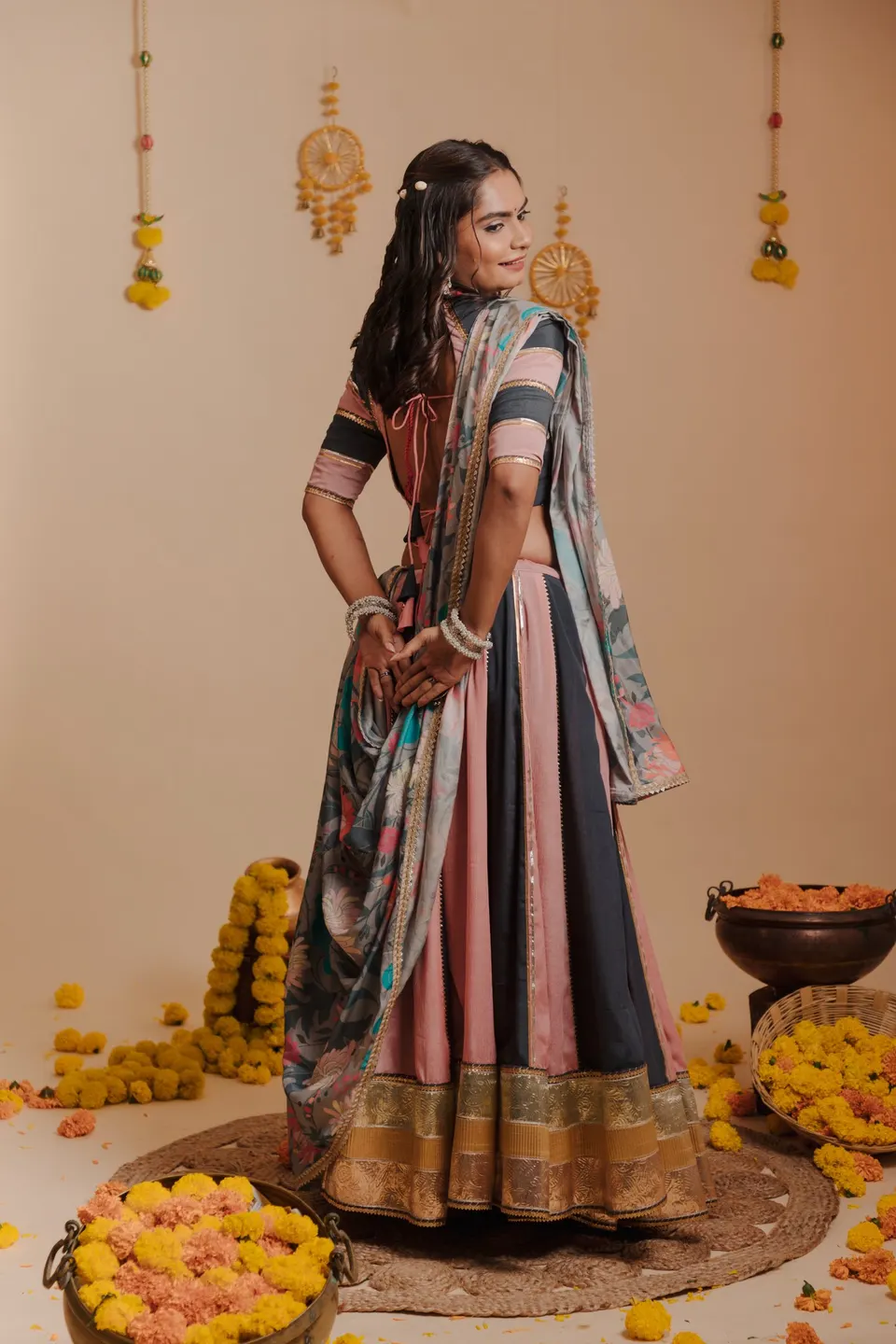
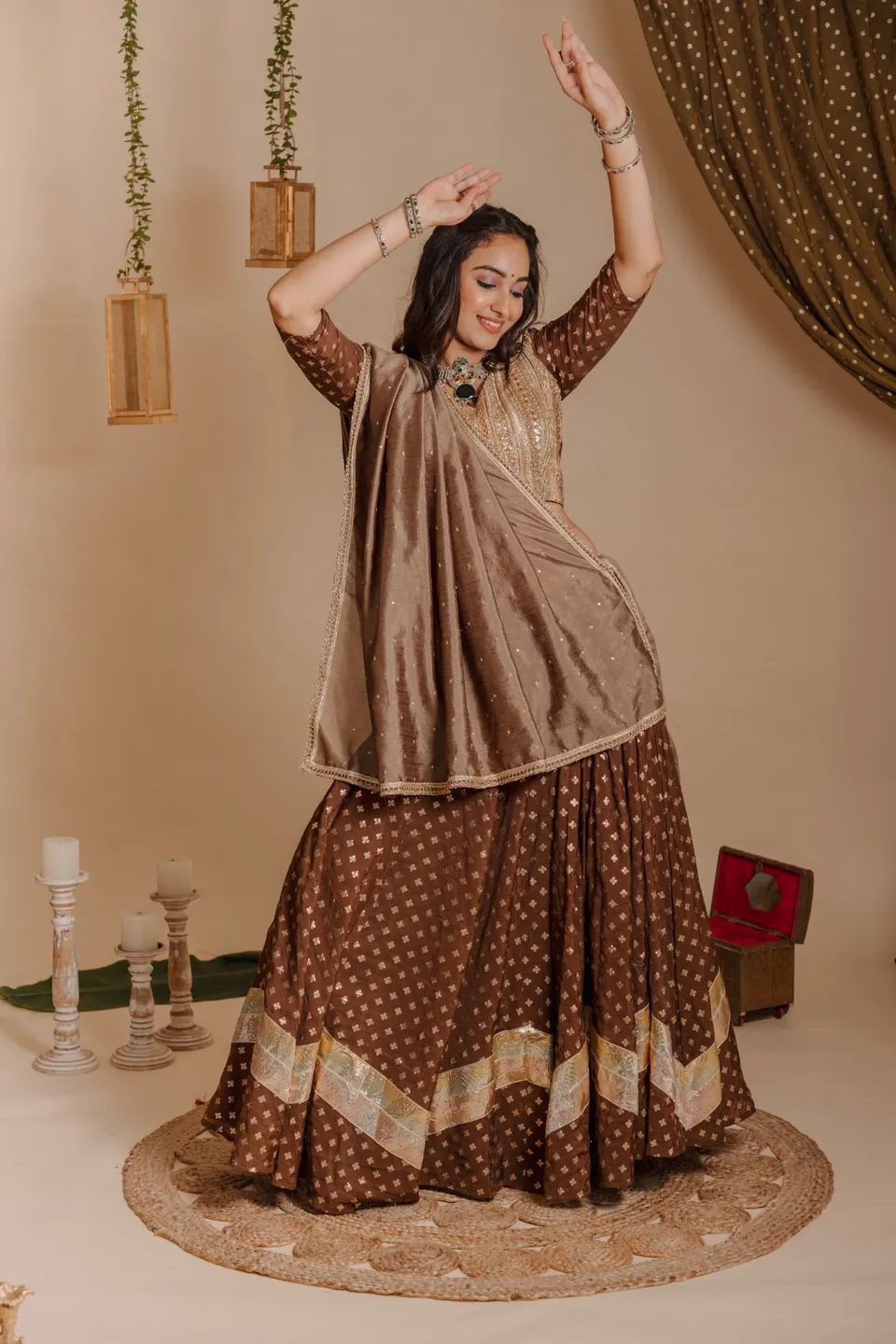
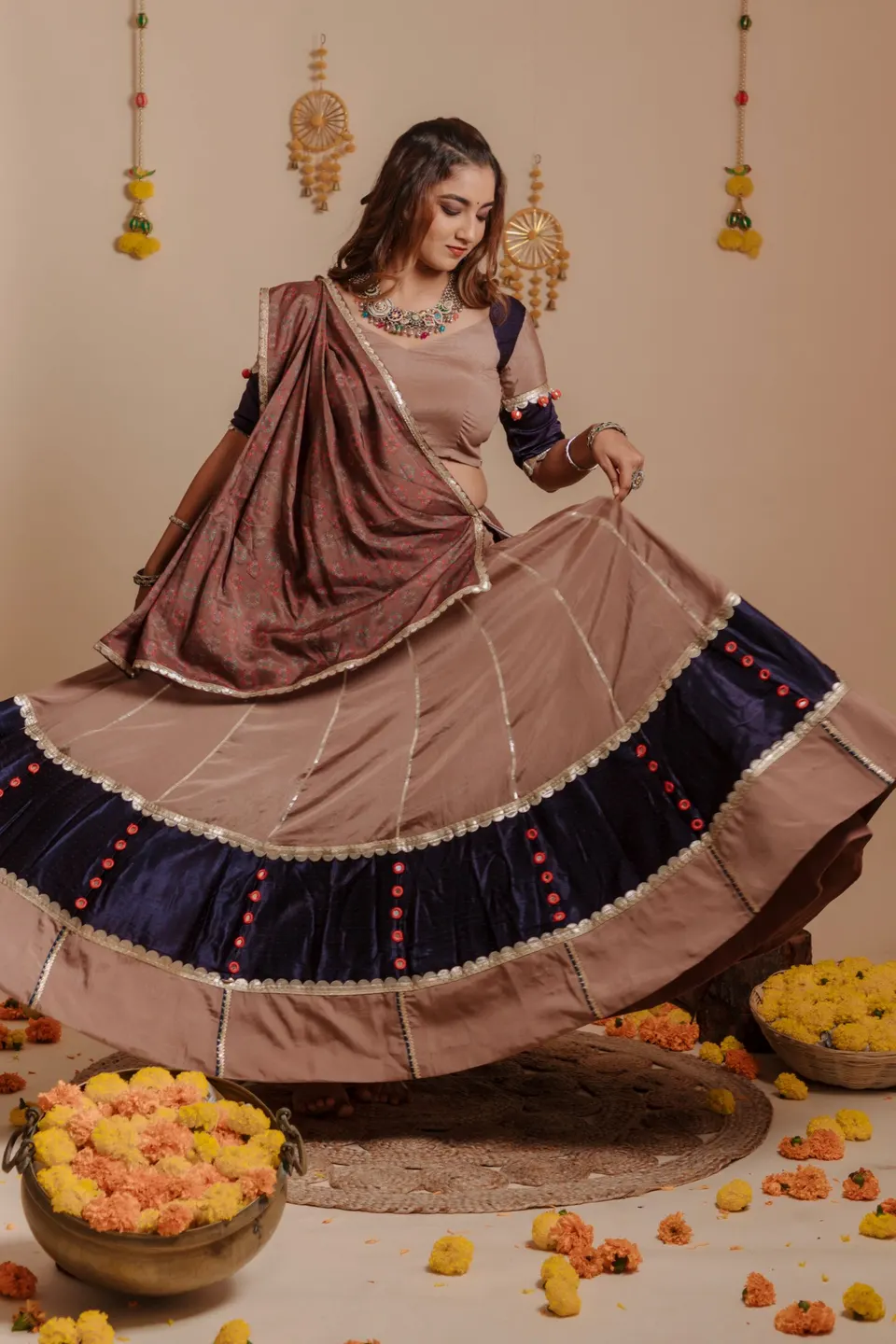
More from Rang Raas 15 more looks
Chaniya cholis and kurtas photographed in the studio, against red drapes and strings of flowers — the skirts caught mid-turn.
Credits
| Photography | @Preciousgraphy |
Rang Raas is seven chaniya cholis built around a single problem: a garba piece is judged in motion, and almost nothing about how a garment photographs standing still predicts how it behaves when the wearer turns.
So the work here is placed where movement will find it. Gota tape is laid along the seams and hems rather than massed across the ground, which puts a line of light exactly where the skirt opens as it goes round. It is the opposite decision from the bridal collection, made by the same studio in the same room, and for a good reason.
Why the work sits at the seams
A chaniya choli is worn for nine nights, and on most of them it is danced in for hours. Weight is therefore not a measure of value here — it is a cost, paid by the person wearing it, in the fourth hour rather than the first.
Gota is ribbon appliqué, which is light for the amount of light it throws back, and laying it along a seam rather than over a panel means the flare of the skirt does the work. The piece reads from across a garba ground, which is the distance that matters, without the wearer carrying the equivalent of a bridal lehenga to achieve it.
Four of the seven are worked this way. It is the through-line of the collection rather than a treatment applied to one piece.
The three that do something else
One carries mirror work — shisha, each mirror caught in hand stitches, which is the craft that reads furthest under the lights a garba ground actually uses.
One is bandhani, and it is a different kind of object from the rest. Bandhani is tie-resist dye from Kutch and Saurashtra, tied by hand dot by dot before the cloth ever meets dye, so the pattern is in the cloth rather than applied to it. That also means colour on a bandhani piece is decided at the very start, before anything is cut.
One carries zari at the neckline — metal thread held to the one part of the garment that sits still and close to the face while everything below it is moving.
Ordering one, and what we will not pretend to know
Any of the seven can be made now, cut to your own measurements, in your own colour. Nothing here is stock and nothing is made in advance, so a collection is a record of work rather than a rail that empties.
One honest caveat, because it belongs on the page rather than in a footnote. These seven were catalogued from the photographs of the shoot. The crafts are what the frames plainly show. The cloths are the softest claim on this page — read from the way each fabric falls rather than from a record — so if the exact cloth of a piece matters to your decision, ask, and we will tell you what we know and what we are inferring rather than guess at you.
Ordering from this collection
Can I still order a piece from Rang Raas?
Yes. Nothing in this studio is made in advance, so a collection is a record of work rather than a rack that empties — there is no stock to be out of. Any of the 7 looks photographed here can be made now, cut to your own measurements.
Can a Rang Raas look be changed?
Within reason, yes, and most brides change something. Colour is the usual one and is settled at the sketch. Weight, neckline, sleeve length and the density of the hand work are all decisions rather than fixtures. What does not change is that the piece is cut to one body — that is the point of it.
What hand work is in Rang Raas?
Gota Patti, Zardozi, Mirror & Thread and Bandhani, worked by hand at frames in the studio on Old Padra Road rather than bought in. The 7 chaniya cholis here are shown with the craft named under each one, and each look has a page explaining the work in it.